February 24, 2026
Top 10 AI CRM Softwares Revolutionizing Customer Relationships in 2026
Share this article:



Manzeel is an award-winning Mortgage Broker and the Owner of the Toronto-based mortgage, Everything Mortgages.
With 16 years of experience in the Canadian mortgage industry and a formal background in mortgage underwriting, Manzeel’s lending expertise gives him unique insight into whether a deal is feasible which empowers his clients to make more informed lending decisions faster.
He has been recognized as one of Canada’s Top 10 Mortgage Brokers by the national Canadian Mortgage Professionals (CMP) Association. Him and his team of 18 mortgage agents are proud to offer a mortgage experience that's built on honesty, trust, and integrity. He prides himself on the brokerage’s dedication to deliver an excellent client experience throughout the entire home loan process from pre-approval to post-funding.
Since moving to Toronto in 1998, Manzeel has successfully launched and scaled several businesses from the ground up, ranging from a mortgage brokerage and a vast real estate investment portfolio to a private financing eCommerce platform. He continues to be a leader in the real estate industry as he uses his analytical expertise to seek new real estate investment opportunities.
As a tech junkie and avid sports enthusiast, when Manzeel’s not working with clients, you can find him reading technology blogs, playing squash or watching tennis with his two boys.
The customer relationship management landscape has transformed dramatically. Businesses no longer rely on static databases and manual data entry to track customer interactions. Instead, artificial intelligence has emerged as the driving force behind modern CRM systems, fundamentally changing how companies understand, predict, and respond to customer needs. The Top 10 AI CRM Softwares Revolutionizing Customer Relationships in 2026 represent a new generation of platforms that combine predictive analytics, automated workflows, and intelligent insights to deliver unprecedented value for sales and support teams.
These cutting-edge platforms leverage machine learning algorithms to analyze customer behavior patterns, forecast sales outcomes with remarkable accuracy, and automate routine tasks that once consumed hours of valuable time. From Salesforce Einstein’s enterprise-grade predictive capabilities to HubSpot’s accessible AI features for small businesses, the competitive landscape offers solutions tailored to every organization size and budget. Understanding which platform aligns with specific business needs has become critical for companies seeking to maintain competitive advantage in an increasingly data-driven marketplace.
Key Takeaways
✅ AI-powered CRM platforms now deliver up to 25% improvement in forecast accuracy through advanced predictive analytics and behavioral pattern recognition[3]
✅ Automated data management eliminates manual CRM hygiene tasks, with AI systems automatically cleaning, syncing, and updating customer records without human intervention[3]
✅ Pricing ranges from free entry-level tiers (HubSpot, Freshsales) to enterprise solutions starting at $65-75/user/month (Salesforce, Microsoft Dynamics 365)[2][3]
✅ AI co-pilot functionality has become the new standard, guiding sales representatives through every stage of the buyer journey with real-time recommendations and automated follow-ups[3][4]
✅ Sentiment analysis and customer prioritization features now flag frustrated customers in real-time, enabling support teams to address critical issues before they escalate[1]
Understanding the AI CRM Revolution in 2026
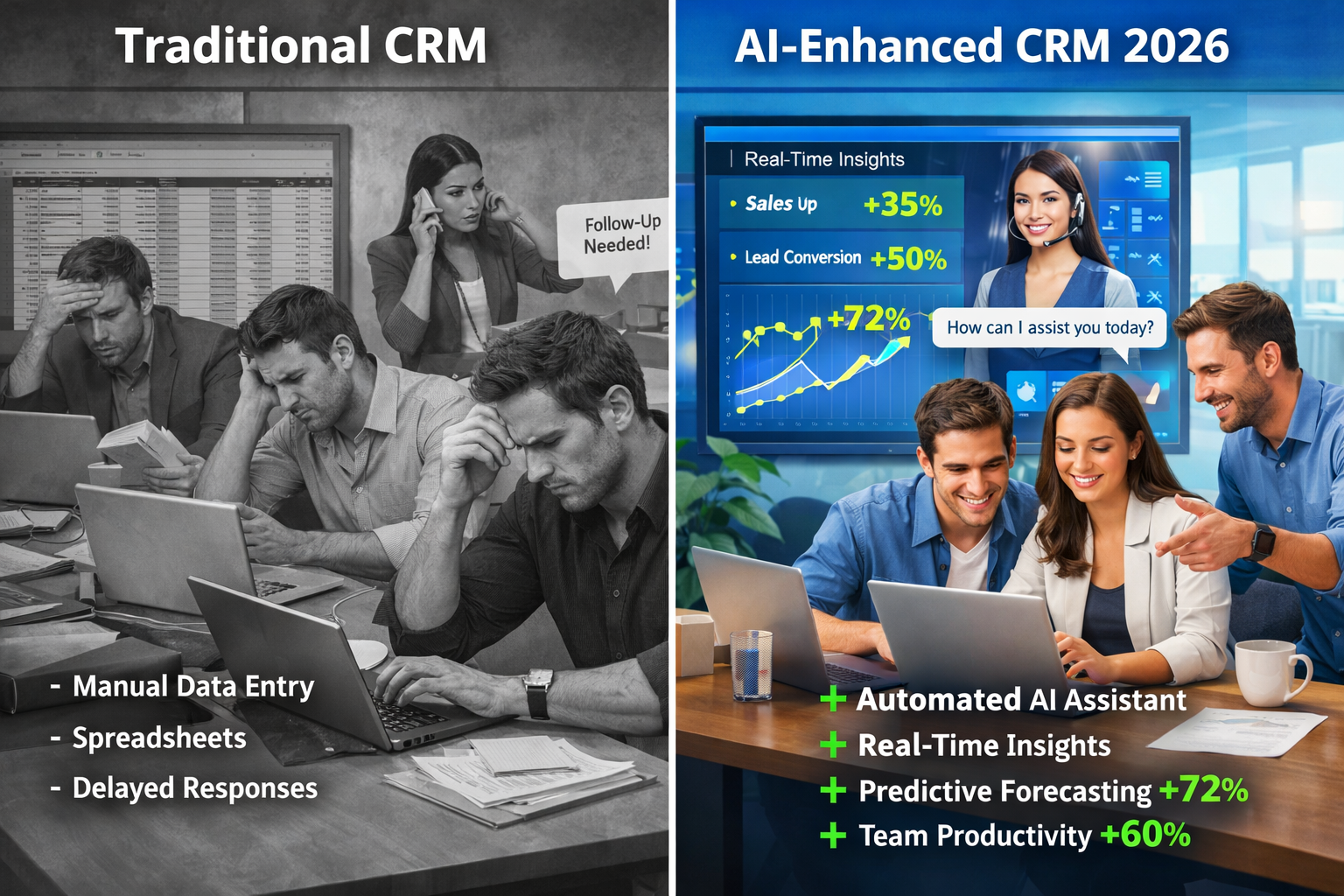
The integration of artificial intelligence into customer relationship management represents more than incremental improvement—it signals a fundamental shift in how businesses operate. Traditional CRM systems served primarily as digital filing cabinets, storing contact information and interaction history. The Top 10 AI CRM Softwares Revolutionizing Customer Relationships in 2026 function as intelligent business partners that actively contribute to revenue generation and customer satisfaction.
What Makes AI CRMs Different?
Predictive capabilities distinguish modern AI CRMs from their predecessors. These systems analyze historical data, engagement patterns, and behavioral signals to forecast which leads will convert, which customers might churn, and which opportunities deserve immediate attention. This predictive power enables sales teams to prioritize efforts strategically rather than relying on gut instinct or outdated lead scoring models.
Automated workflows handle repetitive tasks that traditionally consumed significant staff time. AI systems automatically update contact records, schedule follow-up activities, route support tickets to appropriate team members, and even draft personalized email responses based on conversation context. This automation frees human team members to focus on high-value activities requiring emotional intelligence and creative problem-solving.
Real-time insights provide actionable intelligence exactly when teams need it. Rather than waiting for weekly reports or quarterly reviews, AI-powered dashboards surface critical information instantly—alerting managers to deals at risk, identifying upsell opportunities, and highlighting customer satisfaction trends as they emerge.
The Business Impact of AI-Enhanced Customer Management
Organizations implementing AI CRM solutions report measurable improvements across multiple performance metrics. Forecast accuracy has increased by up to 25% as machine learning algorithms identify patterns human analysts might miss[3]. Sales cycle length decreases when AI systems guide representatives toward the most effective next actions. Customer satisfaction scores improve when support teams receive real-time sentiment analysis and intelligent ticket routing.
The financial implications extend beyond operational efficiency. Companies leveraging AI CRM platforms report higher conversion rates, increased customer lifetime value, and reduced customer acquisition costs. These platforms enable businesses to deliver personalized experiences at scale—something previously possible only through labor-intensive manual processes.
For organizations evaluating technology investments, understanding the complete mortgage process requires similar attention to detail and documentation as implementing enterprise software solutions.
The Top 10 AI CRM Softwares Revolutionizing Customer Relationships in 2026
1. Salesforce Customer 360 with Einstein AI 🏆
Salesforce maintains its position as the enterprise CRM leader through continuous innovation in artificial intelligence. The Einstein AI layer integrates seamlessly across the entire Customer 360 platform, delivering predictive insights that drive strategic decision-making[3].
Key Features:
- Predictive lead scoring analyzes dozens of data points to identify high-potential opportunities
- Automated opportunity insights flag deals requiring attention and suggest optimal next steps
- Einstein Conversation Insights transcribe sales calls and extract actionable intelligence
- Forecasting AI delivers up to 25% improvement in accuracy compared to traditional methods[3]
Pricing: Advanced AI features available through add-ons starting at $75/user/month[3]
Best For: Enterprise organizations with complex sales processes and dedicated implementation resources
Considerations: Steep learning curve and significant implementation investment required[2]
2. HubSpot Service Hub with AI-Powered Automation 💼
HubSpot has democratized AI CRM capabilities by integrating sophisticated features across its free and paid tiers. The platform excels in ease of use while delivering enterprise-grade AI functionality accessible to small and mid-sized businesses[3].
Key Features:
- AI-powered email composition generates personalized messages based on contact context
- Predictive lead scoring available even in free tier
- Automated workflow recommendations suggest optimal automation opportunities
- Content Assistant creates blog posts, social media content, and marketing materials
- Forecasting tools analyze pipeline health and predict revenue outcomes[4]
Pricing: Free tier available; paid plans range from $20-$90/user/month[3]
Best For: SMBs and mid-market companies prioritizing user-friendly interfaces and quick deployment
Standout Advantage: Strongest balance of AI capabilities and accessibility in the market
3. Zendesk AI Platform 🎯
Zendesk evolved from help desk software into a comprehensive CRM ecosystem serving support, sales, and customer engagement teams. The Zendesk AI platform focuses specifically on reducing resolution times and improving customer satisfaction through intelligent automation[1].
Key Features:
- Intelligent ticket routing assigns inquiries to the most qualified team members
- Sentiment detection identifies frustrated customers requiring priority attention[1]
- Suggested macros recommend responses based on ticket content analysis[1]
- Conversation summarization provides context without reading entire interaction histories
- Predictive CSAT scoring forecasts customer satisfaction before surveys return
Best For: Customer support-focused organizations managing high ticket volumes
Integration Strength: Seamless connection between Support, Sell, and Sunshine products[1]
4. Zoho CRM with Zia AI Assistant 💡
Zoho CRM delivers exceptional value for budget-conscious organizations without sacrificing AI capabilities. The Zia AI assistant specializes in pattern detection, anomaly identification, and predictive analytics[4].
Key Features:
- Predictive lead and deal scoring identifies opportunities most likely to convert
- Real-time data anomaly detection flags unusual patterns requiring investigation[4]
- Conversational AI allows natural language queries about CRM data
- Workflow suggestions recommend automation opportunities based on team behavior
- Email sentiment analysis gauges prospect engagement and interest levels
Pricing: Starting at $40/user/month[3]
Best For: Small-to-midsize teams seeking comprehensive AI features at accessible price points
Unique Capability: Zia’s pattern recognition identifies trends human analysts might overlook
5. Cirrus Insight for Salesforce Teams ⚡
Cirrus Insight has emerged as a powerful AI-driven platform specifically designed for Salesforce-first organizations. The system unifies scheduling, coaching, and CRM automation in a streamlined interface that enhances rather than replaces Salesforce[3].
Key Features:
- AI Meeting Prep automatically generates pre-call briefings with relevant context
- Next Steps AI recommends and automates follow-up actions after interactions[3]
- Proposal generation creates customized documents based on opportunity data[3]
- Email tracking with AI-powered engagement scoring
- Calendar intelligence optimizes scheduling based on deal priority and stage
Best For: Sales teams already invested in Salesforce ecosystem seeking enhanced productivity
Standout Feature: Seamless Salesforce integration without requiring platform migration
Similar to how mortgage professionals need proper documentation to streamline approvals, sales teams require organized data and automated workflows to accelerate deal cycles.
6. Pipedrive with AI-Powered Pipeline Management 📊
Pipedrive targets small-to-mid-sized sales teams with its intuitive visual interface and intelligent automation. The platform emphasizes pipeline optimization through AI-driven insights and recommendations[3].
Key Features:
- Visual workflow designer with AI-suggested automation triggers
- Deal probability scoring based on historical win rates and engagement patterns
- Activity recommendations suggest optimal next steps for each opportunity
- Revenue forecasting with confidence intervals and risk analysis
- Email AI drafts personalized messages using contact and deal context
Pricing: Starting at $14.90/user/month[3]
Best For: Sales-focused teams prioritizing visual pipeline management and ease of use
User Experience: Lowest learning curve among comprehensive AI CRM platforms[2]
7. Freshsales with Freddy AI 🚀
Freshsales combines growing team requirements with Freddy AI, delivering real-time customer insights and intelligent lead scoring. The platform offers a generous free tier with premium AI features available at higher subscription levels[3].
Key Features:
- Freddy AI lead scoring prioritizes prospects based on conversion likelihood
- Deal insights identify risks and opportunities within the sales pipeline
- Email intelligence optimizes send times and subject lines for maximum engagement
- Chatbot automation handles initial customer inquiries and qualification
- Predictive contact scoring identifies which existing customers warrant attention
Pricing: Free plan available; premium tiers start at competitive rates[2]
Best For: Rapidly growing teams needing scalable AI capabilities without enterprise pricing
Integration Ecosystem: Strong connectivity with marketing automation and support tools
8. Microsoft Dynamics 365 with AI Builder 🏢
Microsoft Dynamics 365 serves organizations already invested in the Microsoft ecosystem. The platform delivers strong integrated AI functionality through AI Builder and seamless connections with Office 365, Teams, and Power Platform[5].
Key Features:
- AI Builder enables custom AI models without coding expertise
- Relationship analytics map customer engagement across all touchpoints
- Predictive opportunity scoring leverages Microsoft’s machine learning infrastructure
- Conversation intelligence analyzes sales calls for coaching opportunities
- Customer insights unify data from multiple sources into actionable profiles
Pricing: Starting at $65/user/month[2]
Best For: Microsoft-first organizations seeking unified productivity and CRM platforms[5]
Enterprise Advantage: Exceptional scalability from small business to global enterprise deployments
9. Copper CRM with Google Workspace Integration 🔗
Copper CRM (formerly ProsperWorks) specializes in Google Workspace integration, making it the natural choice for organizations built on Gmail, Google Calendar, and Google Drive. AI features focus on eliminating manual data entry and surfacing contextual insights.
Key Features:
- Automatic contact creation from email interactions
- Relationship intelligence tracks communication frequency and engagement
- Pipeline automation moves deals through stages based on activity triggers
- AI-powered reminders suggest follow-ups based on interaction patterns
- Google Workspace sidebar provides CRM context without leaving Gmail
Best For: Google Workspace-centric organizations prioritizing seamless integration
Unique Value: Deepest native integration with Google productivity tools
10. Salesflare for Small Business Automation 🌟
Salesflare targets small businesses and solo entrepreneurs with maximum automation and minimal manual input. The platform automatically builds and maintains CRM records by monitoring email, calendar, and social media interactions.
Key Features:
- Automatic contact enrichment pulls company and individual data from public sources
- Relationship tracking monitors communication patterns and flags neglected contacts
- Email tracking with AI-powered engagement scoring
- Smart reminders suggest follow-ups based on deal stage and time elapsed
- Pipeline insights identify bottlenecks and optimization opportunities
Pricing: Accessible for small teams with straightforward per-user pricing
Best For: Small businesses and entrepreneurs seeking automation without complexity
Philosophy: “Set it and forget it” approach minimizes CRM maintenance burden
Comparing AI CRM Features and Capabilities
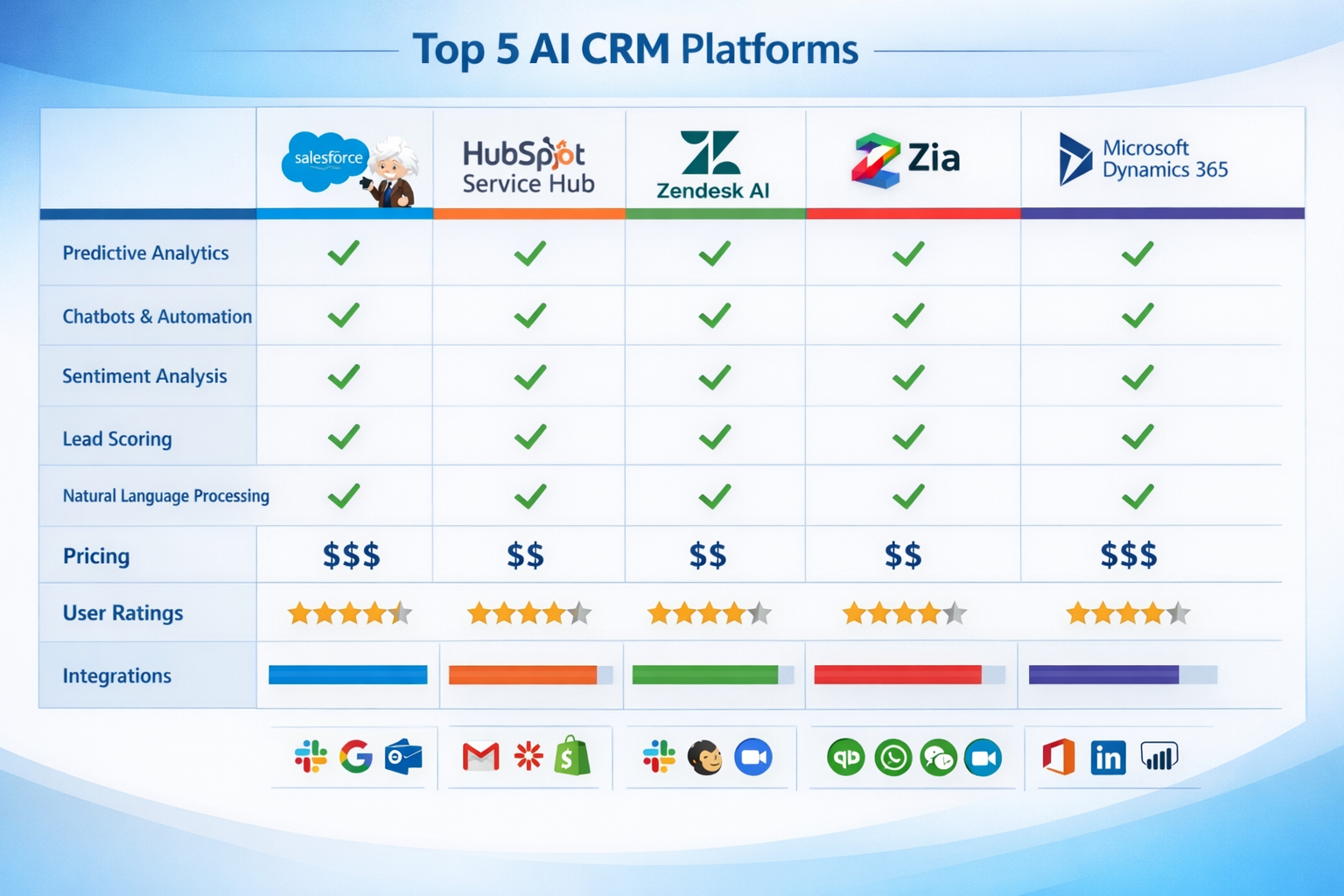
| Platform | AI Strength | Starting Price | Best For | Learning Curve |
|---|---|---|---|---|
| Salesforce Einstein | ⭐⭐⭐⭐⭐ | $75/user/mo | Enterprise | Steep |
| HubSpot | ⭐⭐⭐⭐⭐ | Free-$90/user/mo | SMB-Mid Market | Easy |
| Zendesk AI | ⭐⭐⭐⭐ | Custom | Support Teams | Moderate |
| Zoho CRM | ⭐⭐⭐⭐ | $40/user/mo | Budget-Conscious | Moderate |
| Cirrus Insight | ⭐⭐⭐⭐⭐ | Custom | Salesforce Users | Easy |
| Pipedrive | ⭐⭐⭐ | $14.90/user/mo | Small Sales Teams | Easy |
| Freshsales | ⭐⭐⭐⭐ | Free-Premium | Growing Teams | Easy |
| Dynamics 365 | ⭐⭐⭐⭐ | $65/user/mo | Microsoft Orgs | Moderate |
| Copper | ⭐⭐⭐ | Custom | Google Users | Easy |
| Salesflare | ⭐⭐⭐ | Custom | Solo-Small Teams | Very Easy |
Key AI Capabilities Transforming CRM in 2026
Predictive Analytics and Forecasting
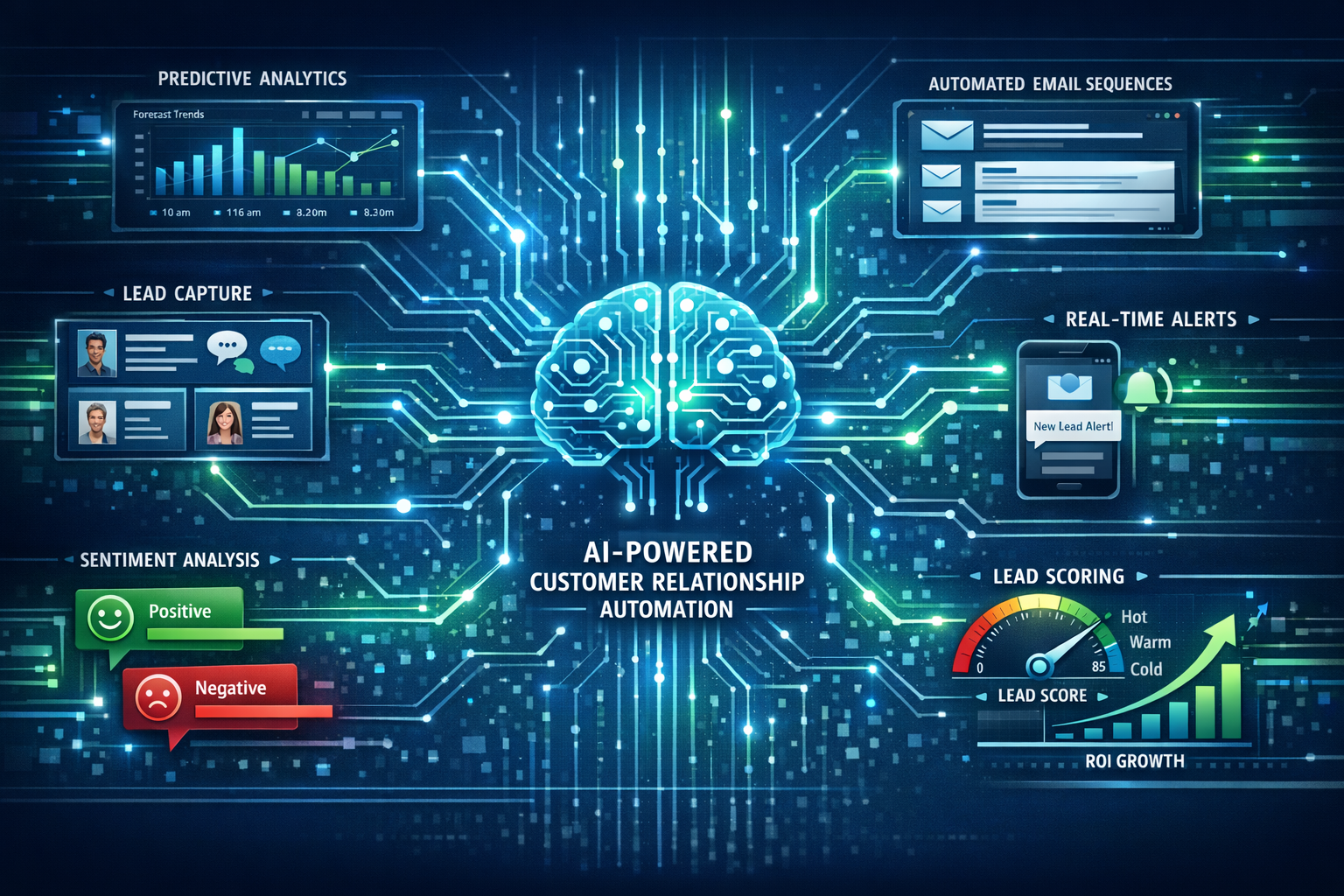
Predictive analytics has evolved from experimental feature to core CRM functionality. Modern AI systems analyze historical performance data, current deal activity, and buyer engagement patterns to forecast outcomes with unprecedented accuracy. Organizations implementing these capabilities report up to 25% improvement in forecast accuracy compared to traditional methods[3].
The technology examines factors human analysts might overlook: email response times, meeting attendance patterns, document engagement, website visit frequency, and dozens of other behavioral signals. Machine learning algorithms identify which combinations of activities correlate most strongly with closed deals, then apply those insights to current opportunities.
Revenue forecasting extends beyond simple pipeline summation. AI systems calculate probability-weighted forecasts, identify risk factors threatening deals, and suggest interventions to improve outcomes. Sales leaders gain visibility into not just what revenue to expect, but which specific opportunities require attention to achieve targets.
Automated Data Management and CRM Hygiene
Data quality determines CRM effectiveness, yet maintaining accurate records traditionally required significant manual effort. The Top 10 AI CRM Softwares Revolutionizing Customer Relationships in 2026 address this challenge through intelligent automation that eliminates “half-updated records”[3].
AI systems automatically:
- Capture contact information from email signatures and business cards
- Update job titles and company information by monitoring LinkedIn and company websites
- Merge duplicate records using sophisticated matching algorithms
- Enrich profiles with firmographic and demographic data from public sources
- Flag outdated information based on bounce rates and engagement patterns
This automation delivers dual benefits: improved data quality and recovered time for revenue-generating activities. Sales representatives no longer spend hours updating contact records or searching for accurate information.
Just as self-employed borrowers require organized financial documentation, sales teams need clean CRM data to make informed decisions and maintain customer relationships.
Sentiment Analysis and Customer Prioritization
Sentiment analysis transforms customer communications from simple text into actionable emotional intelligence. AI systems analyze word choice, punctuation, response times, and communication frequency to gauge customer satisfaction and engagement levels[1].
Zendesk’s AI platform exemplifies this capability by flagging frustrated customers in real-time, enabling support teams to prioritize urgent issues before they escalate[1]. The system analyzes ticket content, previous interaction history, and response patterns to identify customers at risk of churn.
Zoho’s Zia assistant extends sentiment analysis to sales contexts, evaluating prospect email responses to gauge interest levels and purchase intent[4]. Sales representatives receive alerts when prospect engagement declines, enabling timely interventions to re-engage cooling opportunities.
This emotional intelligence capability helps teams allocate attention strategically. Rather than treating all customers equally, organizations can prioritize high-value accounts showing signs of dissatisfaction or identify enthusiastic customers ready for upsell conversations.
AI Co-Pilot and Guided Selling
The AI co-pilot approach represents the next evolution in sales enablement. Rather than simply storing information, these systems actively guide representatives through every stage of the buyer journey with contextual recommendations and automated assistance[3][4].
Cirrus Insight’s AI Meeting Prep exemplifies this capability by automatically generating pre-call briefings that include recent interactions, relevant news about the prospect’s company, and suggested talking points[3]. Representatives enter conversations fully prepared without spending time manually researching and compiling information.
Next Steps AI extends this guidance beyond individual interactions by recommending optimal follow-up actions and automatically executing routine tasks[3]. After a discovery call, the system might suggest sending specific case studies, scheduling a product demonstration, or involving a technical specialist—then automate the scheduling and communication.
This guided approach particularly benefits newer sales representatives by encoding best practices into the CRM workflow. Rather than relying solely on training and experience, team members receive real-time coaching based on what has historically worked for similar opportunities.
Choosing the Right AI CRM for Your Organization
Assessing Business Requirements
Organization size significantly influences which platform delivers optimal value. Enterprise teams with complex sales processes and dedicated IT resources benefit from Salesforce Einstein’s comprehensive capabilities despite higher implementation costs. Small businesses prioritizing ease of use and quick deployment find better alignment with HubSpot or Pipedrive.
Existing technology ecosystem creates natural affinities. Organizations standardized on Microsoft 365 should strongly consider Dynamics 365 for seamless integration. Google Workspace users benefit from Copper’s native Gmail integration. Salesforce customers can enhance their existing investment through Cirrus Insight rather than platform migration.
Budget constraints require honest assessment. While free tiers from HubSpot and Freshsales offer genuine AI capabilities, premium features often justify their cost through improved conversion rates and operational efficiency. Calculate total cost of ownership including implementation, training, and ongoing administration—not just subscription fees.
Evaluating Integration Requirements
API connectivity determines how effectively CRM data flows throughout the organization. Modern AI CRMs should integrate seamlessly with:
- Marketing automation platforms for lead nurturing and campaign tracking
- Customer support systems for unified customer views
- Accounting software for revenue recognition and invoicing
- Communication tools like Slack, Teams, or Zoom
- Analytics platforms for advanced reporting and business intelligence
Organizations with extensive integration requirements should prioritize platforms with robust API documentation, active developer communities, and pre-built connectors to commonly used tools.
Calculating Real-World ROI
Return on investment extends beyond subscription costs to encompass productivity gains, conversion improvements, and customer retention benefits. Organizations evaluating AI CRM platforms should measure:
Time savings from automated data entry, intelligent scheduling, and guided workflows. If AI automation recovers 5 hours per sales representative weekly, calculate the value of that time redirected toward revenue-generating activities.
Conversion rate improvements resulting from predictive lead scoring and optimal next-step recommendations. A 10% increase in conversion rate directly impacts revenue without increasing marketing spend.
Customer lifetime value gains from improved retention and upsell identification. AI systems that flag at-risk customers or identify expansion opportunities create measurable financial impact.
Forecast accuracy improvements enable better resource allocation and inventory management. Organizations making strategic decisions based on reliable forecasts avoid costly over-investment or missed opportunities.
Similar to how mortgage brokers provide value through expert guidance and access to multiple lenders, AI CRM platforms deliver ROI through capabilities individual teams couldn’t develop independently.
Implementation Best Practices for AI CRM Success
Data Migration and Quality Assurance
Clean data migration establishes the foundation for AI effectiveness. Machine learning algorithms trained on inaccurate historical data produce unreliable predictions. Organizations should:
- Audit existing data to identify duplicates, outdated records, and incomplete information
- Establish data standards for consistent formatting and required fields
- Map legacy fields to new CRM structure with clear transformation rules
- Migrate in phases starting with recent, high-quality records
- Validate results through sampling and user testing before full deployment
Data governance policies ensure quality persists beyond initial migration. Define ownership for different data types, establish update protocols, and implement validation rules preventing incomplete record creation.
User Adoption and Change Management
Technology adoption determines whether AI CRM investments deliver promised returns. The most sophisticated platform provides zero value if sales teams continue using spreadsheets and email folders.
Executive sponsorship signals organizational commitment and provides resources for successful implementation. Leaders should articulate clear expectations, celebrate early adopters, and address resistance constructively.
Comprehensive training extends beyond basic platform navigation to include AI-specific capabilities. Team members should understand how predictive scoring works, when to trust AI recommendations, and how to provide feedback improving algorithm accuracy.
Gradual rollout allows teams to build competency progressively rather than overwhelming users with simultaneous changes. Start with core contact management and basic automation, then introduce advanced AI features as comfort levels increase.
Continuous Optimization and Feedback Loops
AI systems improve through continuous learning from user feedback and outcome data. Organizations should establish processes for:
Regular accuracy audits comparing AI predictions to actual outcomes. If lead scoring consistently over-estimates or under-estimates conversion probability, algorithms require retraining with updated data.
User feedback collection identifying where AI recommendations prove helpful versus misleading. Sales representatives interacting with prospects daily often recognize patterns algorithms miss.
A/B testing different AI configurations to identify optimal settings. Test various lead scoring thresholds, automation triggers, and recommendation algorithms to determine what drives best results.
Performance monitoring tracking key metrics before and after AI implementation. Measure changes in conversion rates, sales cycle length, forecast accuracy, and customer satisfaction to quantify impact.
Future Trends in AI CRM Technology
Conversational AI and Natural Language Interfaces
Voice-activated CRM is transitioning from novelty to practical tool. Sales representatives will increasingly interact with CRM systems through natural conversation rather than form filling. “Show me my deals closing this quarter” or “Schedule a follow-up call with Sarah next Tuesday” will become standard interaction patterns.
Generative AI will compose emails, proposals, and presentations based on CRM data and successful templates. Rather than writing from scratch, representatives will review and refine AI-generated content aligned with prospect context and buying stage.
Hyper-Personalization at Scale
Individual customer experiences will become the standard expectation even for organizations managing thousands of relationships. AI systems will tailor every interaction—email content, product recommendations, pricing proposals, support responses—based on comprehensive behavioral analysis.
Predictive engagement will identify optimal contact timing, communication channels, and message framing for each individual customer. Rather than batch-and-blast campaigns, organizations will deliver precisely timed, personally relevant interactions.
Ethical AI and Transparency
Algorithmic transparency will become increasingly important as AI systems influence critical business decisions. Organizations will demand explainable AI that articulates why specific recommendations were made rather than “black box” predictions.
Bias detection will help ensure AI systems don’t perpetuate or amplify human prejudices embedded in historical data. Regular audits will examine whether algorithms treat different customer segments equitably.
Privacy protection will evolve as regulations like GDPR establish stricter requirements for customer data usage. AI CRM systems will need to deliver personalization while respecting privacy preferences and regulatory constraints.
Conclusion: Selecting Your AI CRM Partner for 2026 Success
The Top 10 AI CRM Softwares Revolutionizing Customer Relationships in 2026 represent a fundamental evolution in how businesses manage customer interactions. These platforms transcend traditional database functionality to become intelligent business partners that predict outcomes, automate routine tasks, and surface actionable insights exactly when teams need them.
Salesforce Einstein continues dominating the enterprise segment with unmatched AI sophistication, while HubSpot democratizes advanced capabilities for small and mid-sized businesses. Zendesk AI excels in customer support contexts, Zoho CRM delivers exceptional value for budget-conscious teams, and Cirrus Insight enhances Salesforce investments with powerful productivity features. Pipedrive, Freshsales, Microsoft Dynamics 365, Copper, and Salesflare each serve specific organizational needs and technology ecosystems.
The right choice depends on organization size, existing technology infrastructure, budget parameters, and specific business requirements. Enterprise teams with complex processes benefit from comprehensive platforms despite higher costs. Small businesses prioritizing quick deployment and ease of use find better alignment with accessible, user-friendly options.
Actionable Next Steps
✅ Audit current CRM performance to identify specific pain points AI capabilities could address
✅ Define success metrics including forecast accuracy, conversion rates, and time savings before evaluating platforms
✅ Request demonstrations from 3-5 platforms aligned with your organization size and technology ecosystem
✅ Pilot with small teams before full deployment to validate AI capabilities deliver promised value
✅ Invest in training ensuring teams understand not just how to use the platform, but how AI features enhance their effectiveness
✅ Establish feedback loops for continuous optimization as AI algorithms learn from your specific business patterns
✅ Monitor ROI through quantitative metrics rather than relying on subjective impressions of platform value
The organizations that thrive in 2026 and beyond will be those that strategically leverage AI to understand customers more deeply, respond more quickly, and deliver more personalized experiences at scale. The technology has matured beyond experimental status—the question is no longer whether to adopt AI CRM, but which platform best aligns with your specific business context.
For businesses managing complex financial relationships, understanding how to choose the right mortgage lender requires similar careful evaluation of capabilities, costs, and alignment with specific needs.
Begin your evaluation today to ensure your organization benefits from the competitive advantages AI-powered customer relationship management delivers.
References
[1] Ai Powered Crm Solutions – https://www.kustomer.com/resources/blog/ai-powered-crm-solutions/
[2] Crm Software Tools – https://clearout.io/blog/crm-software-tools/
[3] Ai Crm – https://www.cirrusinsight.com/blog/ai-crm
[4] Best Ai Crm For Small Business – https://capsulecrm.com/blog/best-ai-crm-for-small-business/
[5] Best Crm Companies To Know About – https://solutionsreview.com/crm/2026/01/05/best-crm-companies-to-know-about/
 Previous Page