May 24, 2026
prusa 3d printer
Share this article:



Manzeel is an award-winning Mortgage Broker and the Owner of the Toronto-based mortgage, Everything Mortgages.
With 16 years of experience in the Canadian mortgage industry and a formal background in mortgage underwriting, Manzeel’s lending expertise gives him unique insight into whether a deal is feasible which empowers his clients to make more informed lending decisions faster.
He has been recognized as one of Canada’s Top 10 Mortgage Brokers by the national Canadian Mortgage Professionals (CMP) Association. Him and his team of 18 mortgage agents are proud to offer a mortgage experience that's built on honesty, trust, and integrity. He prides himself on the brokerage’s dedication to deliver an excellent client experience throughout the entire home loan process from pre-approval to post-funding.
Since moving to Toronto in 1998, Manzeel has successfully launched and scaled several businesses from the ground up, ranging from a mortgage brokerage and a vast real estate investment portfolio to a private financing eCommerce platform. He continues to be a leader in the real estate industry as he uses his analytical expertise to seek new real estate investment opportunities.
As a tech junkie and avid sports enthusiast, when Manzeel’s not working with clients, you can find him reading technology blogs, playing squash or watching tennis with his two boys.
When Josef Prusa released his first RepRap-inspired 3D printer in 2012, few predicted that his Czech startup would become the world’s largest desktop 3D printer manufacturer by 2026, shipping over 500,000 units globally. The prusa 3d printer has evolved from a hobbyist kit into a professional-grade manufacturing tool trusted by engineers, designers, educators, and makers worldwide. This comprehensive guide explores why Prusa Research dominates the desktop 3D printing market and how their machines deliver exceptional value for both beginners and professionals.
Key Takeaways
- Prusa 3D printers offer open-source design, exceptional print quality, and industry-leading customer support at competitive price points
- The product line ranges from the compact Prusa MINI+ ($429) to the large-format Prusa XL ($2,499+), serving diverse manufacturing needs
- Advanced features like automatic bed leveling, filament sensors, and crash detection make Prusa machines remarkably user-friendly
- The active Prusa community provides thousands of free print profiles, modifications, and troubleshooting resources
- Regular firmware updates and hardware improvements ensure long-term value and performance optimization
What Makes a Prusa 3D Printer Different?
Open-Source Philosophy and Community Innovation
Unlike proprietary competitors, every prusa 3d printer embraces open-source principles. Prusa Research publishes complete design files, allowing users to modify, repair, and upgrade their machines freely. This transparency has cultivated a global community of developers who contribute improvements, custom modifications, and innovative solutions.
The open-source approach delivers tangible benefits:
- Complete repairability with readily available replacement parts
- Unlimited customization potential for specialized applications
- No vendor lock-in for materials or software
- Continuous improvement through community feedback
- Educational value for understanding additive manufacturing principles
Engineering Excellence and Quality Control
Prusa Research manufactures every printer in their Prague facility, maintaining strict quality standards that mass-produced competitors cannot match. Each machine undergoes rigorous testing before shipment, including:
✅ Multi-point bed leveling calibration
✅ Extrusion consistency verification
✅ Motion system accuracy testing
✅ Electrical safety inspection
✅ Print quality validation with test models
This attention to detail explains why Prusa machines consistently achieve first-layer success rates above 95%—a critical metric that separates reliable printers from frustrating ones.
Prusa 3D Printer Model Comparison
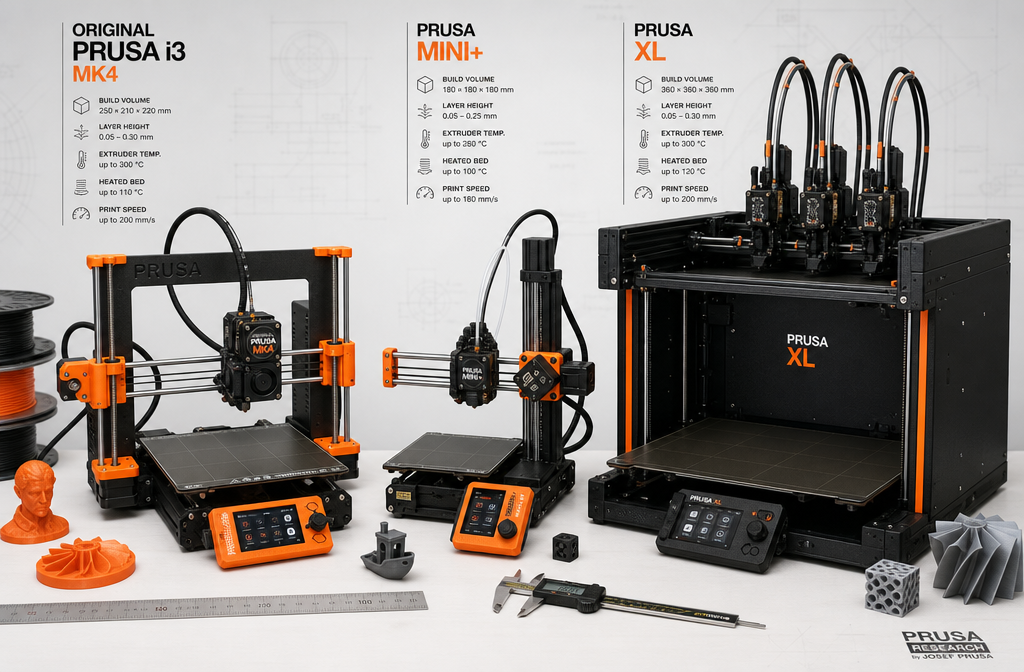
Understanding which prusa 3d printer fits your needs requires examining the current product lineup. Each model targets specific use cases while maintaining the quality standards Prusa users expect.
The Prusa Product Ecosystem
| Model | Build Volume | Price (2026) | Best For | Key Features |
|---|---|---|---|---|
| Prusa MINI+ | 180×180×180mm | $429 | Beginners, small parts | Compact, WiFi, 32-bit board |
| Original Prusa i3 MK4 | 250×210×220mm | $1,099 | General purpose | Input shaper, Nextruder, 400mm/s |
| Prusa XL | 360×360×360mm | $2,499+ | Large prints, multi-material | Up to 5 toolheads, CoreXY |
| Prusa SL1S SPEED | 127×80×150mm | $1,999 | High detail resin | Monochrome LCD, 4K resolution |
Choosing Your Prusa 3D Printer
For beginners: The Prusa MINI+ offers an exceptional entry point with professional features at an accessible price. Its smaller build volume suits most hobbyist projects while teaching fundamental 3D printing concepts.
For professionals: The Original Prusa i3 MK4 represents the sweet spot between capability and cost. With speeds reaching 400mm/s and advanced features like pressure advance and input shaping, it handles production work efficiently.
For specialized needs: The Prusa XL tackles large-format projects and multi-material prints that smaller machines cannot accommodate. Its modular toolhead system enables complex color combinations and material transitions without manual intervention.
For ultra-high detail: The Prusa SL1S SPEED resin printer achieves layer resolutions down to 25 microns, perfect for jewelry, dental models, miniatures, and precision prototypes.
Advanced Features That Define Prusa 3D Printers
Automatic Bed Leveling and Mesh Compensation
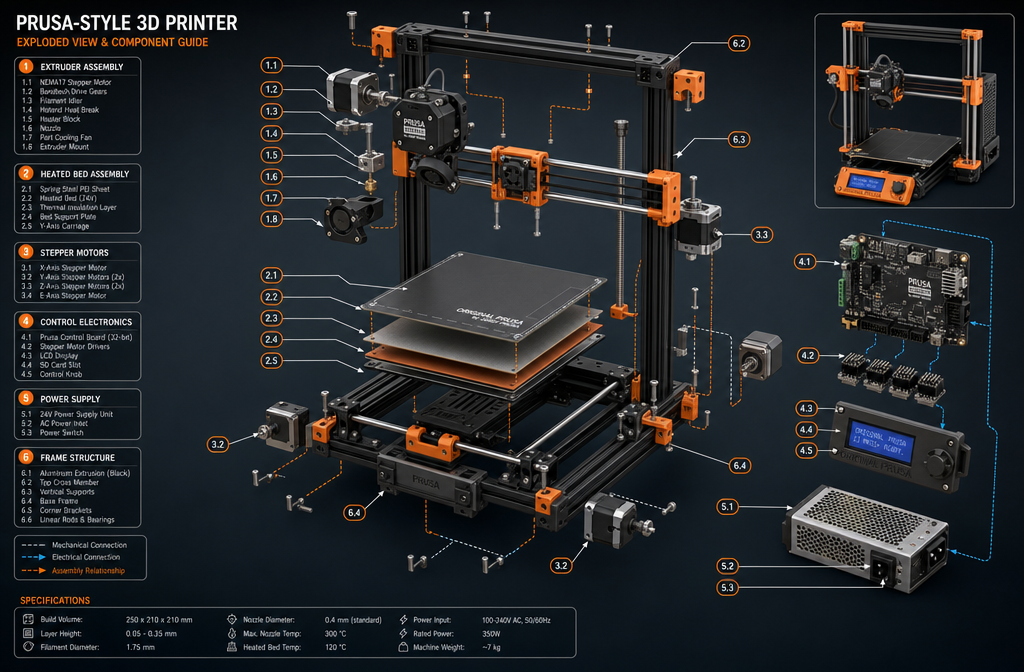
Every modern prusa 3d printer includes sophisticated bed leveling systems that eliminate the manual calibration headaches plaguing budget alternatives. The system works through:
- Probe-based measurement of multiple bed surface points
- Mesh generation mapping microscopic height variations
- Real-time Z-axis compensation during printing
- Automatic recalibration before each print job
This technology ensures consistent first-layer adhesion across the entire build surface, dramatically reducing failed prints and wasted materials.
Filament Detection and Recovery
Mid-print filament runout once meant automatic print failure. Prusa’s integrated filament sensors detect material depletion and pause printing automatically, allowing users to load new spools without losing hours of work. The system remembers the exact position and resumes seamlessly.
Advanced models also detect filament jams and grinding, preventing the common scenario where the extruder continues moving while no material flows—a silent failure mode that wastes time and electricity.
Crash Detection and Power Recovery
The crash detection system monitors motor resistance, identifying collisions with print debris or mechanical obstructions. When detected, the printer pauses immediately, preventing damage to the print head, bed surface, or printed object.
Similarly, power panic technology saves print progress to memory during electrical outages. When power returns, the printer offers to resume from the last completed layer, salvaging prints that would otherwise require complete restarts.
PrusaSlicer: Professional Software at No Cost
While hardware excellence matters, software determines the practical usability of any 3D printer. PrusaSlicer provides professional-grade features completely free:
- Automatic support generation with customizable density and patterns
- Variable layer height for balancing speed and detail
- Multi-material painting for color and material assignment
- Print time estimation accurate within 5-10%
- Integrated G-code preview showing every toolpath
- Extensive material profiles for hundreds of filament types
The software updates regularly with community-requested features and optimizations for new materials. Unlike proprietary slicers that lock users into specific ecosystems, PrusaSlicer works with any G-code compatible printer.
Practical Applications and Real-World Performance
Professional Prototyping and Manufacturing
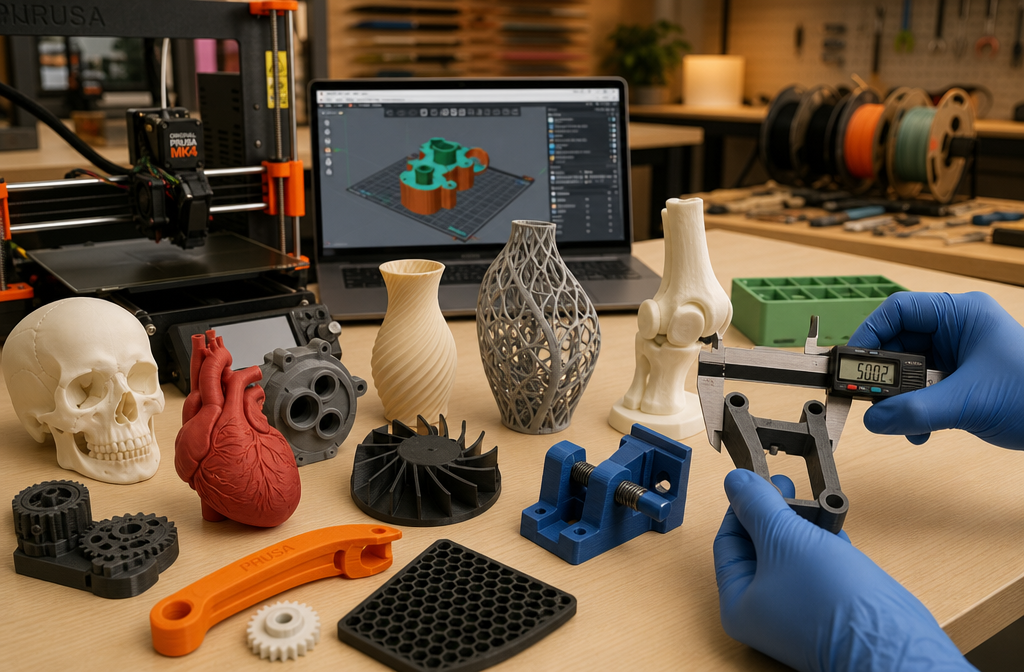
Engineering firms worldwide rely on prusa 3d printers for rapid prototyping cycles. The combination of dimensional accuracy (±0.1mm typical), material variety, and print speed enables iterative design processes that would be prohibitively expensive with traditional manufacturing.
Case applications include:
- 🔧 Functional mechanical prototypes with threaded inserts
- 📐 Architectural scale models with intricate details
- 🏭 Manufacturing jigs, fixtures, and tooling
- 🔬 Laboratory equipment and custom scientific apparatus
- 🎨 Art installations and sculptural elements
Educational Environments
Schools and universities favor Prusa machines for their reliability and educational value. The open-source nature allows students to understand mechanical systems, electronics, and software integration while producing practical projects. The robust construction withstands classroom environments better than consumer-grade alternatives.
Small Business Production
Entrepreneurs use prusa 3d printers for low-volume manufacturing, custom products, and on-demand production. The machines’ consistency enables quality control standards suitable for commercial sales, while the reasonable price point keeps startup costs manageable.
Popular business applications:
- Custom phone cases and accessories
- Replacement parts for discontinued products
- Personalized gifts and decorative items
- Cosplay armor and prop fabrication
- Dental and medical device prototyping
Maintenance, Upgrades, and Long-Term Ownership
Routine Maintenance Requirements
Prusa machines require minimal maintenance compared to competitors, but regular care ensures optimal performance:
Monthly tasks:
- Clean build surface with isopropyl alcohol
- Check belt tension and adjust if necessary
- Inspect nozzle for debris or damage
- Verify all fasteners remain tight
Quarterly tasks:
- Lubricate linear bearings and rods
- Clean extruder gears and check for wear
- Update firmware to latest stable version
- Calibrate first layer height
Annual tasks:
- Replace PTFE tube in hotend
- Inspect and replace worn belts
- Deep clean all mechanical components
- Verify electrical connections
Upgrade Path and Expandability
The modular design of every prusa 3d printer supports continuous improvement through upgrades. Popular modifications include:
- Hardened steel nozzles for abrasive materials like carbon fiber
- High-flow hotends increasing volumetric flow rates
- Enclosure kits for temperature-sensitive materials like ABS
- Multi-material units enabling color and material transitions
- Raspberry Pi integration for remote monitoring and control
Prusa Research regularly releases official upgrades that existing owners can purchase and install, extending machine lifespan and capabilities without requiring complete replacement.
Community Support and Resources
The Prusa community represents one of the platform’s greatest assets. Resources include:
- PrusaPrinters.org: Free model repository with over 100,000 designs
- Prusa Forum: Active community solving technical challenges
- Official documentation: Comprehensive assembly and troubleshooting guides
- YouTube channel: Video tutorials covering every aspect of operation
- 24/7 chat support: Direct assistance from Prusa technical staff
This ecosystem ensures that help is always available, whether you’re troubleshooting a first print or optimizing advanced settings for exotic materials.
Material Compatibility and Print Quality
Supported Filament Types
Prusa 3d printers handle virtually every thermoplastic filament available:
Standard materials:
- PLA (Polylactic Acid) – Easiest to print, biodegradable
- PETG (Polyethylene Terephthalate Glycol) – Strong, chemical resistant
- ABS (Acrylonitrile Butadiene Styrene) – Durable, heat resistant
Engineering materials:
- Nylon (Polyamide) – Exceptional strength and flexibility
- Polycarbonate – High temperature and impact resistance
- TPU (Thermoplastic Polyurethane) – Flexible and elastic
Specialty materials:
- Carbon fiber composites – Lightweight with high stiffness
- Wood-filled filaments – Natural appearance and texture
- Metal-filled filaments – Weighted feel and metallic finish
The all-metal hotend design supports temperatures up to 300°C, accommodating even high-temperature engineering polymers without hardware modifications.
Achievable Print Quality
Layer resolution ranges from 0.05mm (ultra-fine detail) to 0.35mm (fast drafts), with 0.15mm representing the optimal balance for most applications. The precision motion system and advanced firmware features like linear advance and input shaping minimize common print artifacts:
- Ringing/ghosting: Eliminated through resonance compensation
- Stringing: Controlled via optimized retraction settings
- Layer inconsistency: Prevented by consistent extrusion pressure
- Warping: Minimized through heated bed and chamber temperature control
Professional users regularly achieve surface finishes requiring minimal post-processing, reducing labor costs and project timelines.
Cost Analysis and Value Proposition
Total Cost of Ownership
While the initial investment in a prusa 3d printer exceeds budget alternatives, the total cost of ownership tells a different story:
Initial costs:
- Printer: $429-$2,499 depending on model
- Filament starter pack: $50-100
- Basic tools and accessories: $30-50
Ongoing costs:
- Filament: $20-50 per kilogram
- Replacement nozzles: $6-15 each (annually)
- Maintenance supplies: $20-40 annually
- Electricity: ~$0.10-0.20 per 10-hour print
Hidden savings:
- Minimal failed prints reduce material waste
- Reliable operation eliminates replacement costs
- Open-source design prevents obsolescence
- Strong resale value maintains investment
Return on Investment for Businesses
Small businesses often achieve ROI within 3-6 months through:
- Reduced prototyping costs compared to outsourcing
- Faster iteration cycles accelerating product development
- Custom tooling production eliminating third-party purchases
- On-demand manufacturing reducing inventory requirements
The combination of reliability, speed, and material versatility makes Prusa machines particularly valuable for commercial applications where downtime directly impacts revenue.
Conclusion: Why Prusa 3D Printers Lead the Industry
The prusa 3d printer ecosystem represents the gold standard in desktop additive manufacturing for compelling reasons: open-source transparency, engineering excellence, comprehensive support, and continuous innovation. Whether you’re a hobbyist printing your first model or a professional manufacturer producing functional parts, Prusa machines deliver consistent results that justify their premium positioning.
Next Steps for Prospective Buyers
If you’re ready to invest in a Prusa 3D printer:
- Assess your needs: Determine typical print sizes and material requirements
- Choose your model: Match capabilities to your specific applications
- Prepare your workspace: Ensure adequate ventilation and stable surfaces
- Join the community: Connect with experienced users before your first print
- Start with PLA: Master basics before advancing to challenging materials
If you’re still researching:
- Download PrusaSlicer and experiment with model preparation
- Explore PrusaPrinters.org to understand printable design possibilities
- Watch assembly videos to appreciate the engineering quality
- Calculate potential ROI based on your specific use cases
The 3D printing landscape continues evolving rapidly, but Prusa Research’s commitment to quality, transparency, and user empowerment ensures their machines remain relevant investments for years to come. With proper maintenance and community support, your prusa 3d printer will serve as a reliable manufacturing tool capable of transforming digital designs into physical reality with remarkable precision and consistency.
 Previous Page