March 23, 2026
Self-Employed Toronto Borrowers: Securing 3.89% 2-Year Fixed Rates at 80% LTV Without Full 2-Year History
Share this article:



Manzeel is an award-winning Mortgage Broker and the Owner of the Toronto-based mortgage, Everything Mortgages.
With 16 years of experience in the Canadian mortgage industry and a formal background in mortgage underwriting, Manzeel’s lending expertise gives him unique insight into whether a deal is feasible which empowers his clients to make more informed lending decisions faster.
He has been recognized as one of Canada’s Top 10 Mortgage Brokers by the national Canadian Mortgage Professionals (CMP) Association. Him and his team of 18 mortgage agents are proud to offer a mortgage experience that's built on honesty, trust, and integrity. He prides himself on the brokerage’s dedication to deliver an excellent client experience throughout the entire home loan process from pre-approval to post-funding.
Since moving to Toronto in 1998, Manzeel has successfully launched and scaled several businesses from the ground up, ranging from a mortgage brokerage and a vast real estate investment portfolio to a private financing eCommerce platform. He continues to be a leader in the real estate industry as he uses his analytical expertise to seek new real estate investment opportunities.
As a tech junkie and avid sports enthusiast, when Manzeel’s not working with clients, you can find him reading technology blogs, playing squash or watching tennis with his two boys.
Getting approved for a Mortgage as a Self-Employed borrower in Toronto has traditionally felt like climbing Mount Everest without proper gear. The standard requirement of two years of tax returns, declining income concerns, and complex documentation have locked many entrepreneurs out of homeownership. But 2026 brings fresh opportunities for Self-Employed Toronto Borrowers: Securing 3.89% 2-Year Fixed Rates at 80% LTV Without Full 2-Year History.
Progressive lenders like Manulife and Scotiabank are now accepting alternative income verification methods, including bank statements and business financial records, making competitive rates accessible even without the traditional two-year income history. With insured mortgage rates currently advertised at 3.89% for 2-year fixed terms at 80% loan-to-value (LTV), self-employed professionals can finally access the same attractive rates as traditional employees[1].
Key Takeaways
✅ Competitive rates are available: Self-employed borrowers can secure 3.89% 2-year fixed rates at 80% LTV through insured mortgage products for properties under $1 million (recently increased to $1.5 million as of December 2025)[3].
✅ Alternative documentation works: Flexible lenders accept bank statements, business financial statements, and Notice of Assessments instead of requiring full two-year T1 General tax return history.
✅ Credit score matters: A minimum credit score of 620 is required to qualify for insurable mortgage rates; scores below this threshold may result in higher rates or alternative lending options[3].
✅ Strategic preparation accelerates approval: Organizing 6-12 months of bank statements, business licenses, and income verification documents can significantly speed up the approval process.
✅ Lender selection is critical: Not all financial institutions offer the same flexibility for self-employed applicants—working with specialized mortgage brokers who understand alternative documentation requirements is essential.
Understanding the 3.89% Rate Landscape for Self-Employed Borrowers in Toronto
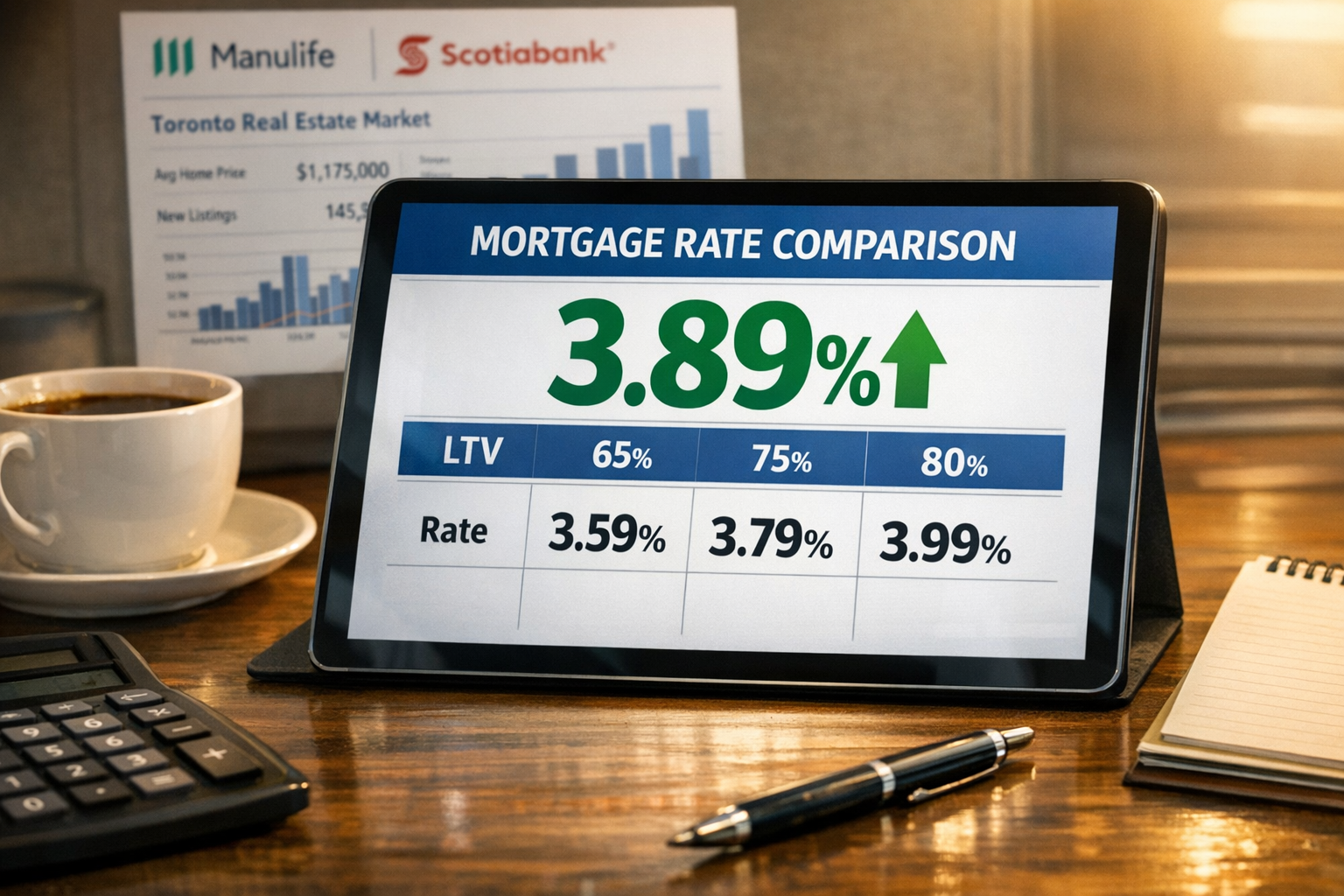
The Canadian mortgage market in 2026 presents a unique opportunity for self-employed professionals. With the Bank of Canada’s overnight lending rate holding at 2.25% as of January 2026, lenders are offering competitive fixed-rate products that were unthinkable just a few years ago[1]. The advertised 3.89% 2-year fixed rate at 80% LTV represents an insurable mortgage product—meaning it qualifies for mortgage default insurance through CMHC, Sagen, or Canada Guaranty.
What Makes These Rates Accessible Now?
Several factors have converged to make Self-Employed Toronto Borrowers: Securing 3.89% 2-Year Fixed Rates at 80% LTV Without Full 2-Year History a realistic goal:
📊 Expanded Property Value Thresholds: As of December 15, 2025, the insurable mortgage threshold increased from $1 million to $1.5 million, opening doors for Toronto borrowers in higher-priced markets[3].
💼 Lender Competition: Major financial institutions are competing aggressively for qualified self-employed borrowers, recognizing that entrepreneurs represent a growing segment of the Canadian workforce.
📈 Improved Economic Outlook: Current mortgage rates across Canada range from 3.7% to 6%, with 4.2% cited as a reasonable competitive rate depending on term and features[2]. The 3.89% offering sits at the lower end of this spectrum, making it particularly attractive.
🏦 Alternative Verification Methods: Progressive lenders have developed sophisticated income verification models that look beyond traditional T1 tax returns, accepting business bank statements, profit-and-loss statements, and other financial documentation.
Key Qualification Criteria
To access these competitive rates, self-employed Toronto borrowers must meet specific requirements:
| Requirement | Details |
|---|---|
| Credit Score | Minimum 620 for insurable rates[3] |
| LTV Ratio | 80% (20% down payment required) |
| Property Value | $1.5 million or less[3] |
| Amortization | Maximum 25 years[3] |
| Income Verification | Bank statements, Notice of Assessments, or business financials |
| Property Type | Owner-occupied residential property |
For more context on current market conditions, explore our guide on self-employed mortgage rates in Toronto for 2026.
Documentation Requirements: Your Fast-Track Approval Checklist

The key to Self-Employed Toronto Borrowers: Securing 3.89% 2-Year Fixed Rates at 80% LTV Without Full 2-Year History lies in strategic documentation preparation. While traditional employment verification requires pay stubs and employment letters, self-employed applicants must demonstrate income stability through alternative means.
Essential Documents for Faster Approvals
📋 Primary Income Verification Documents
Bank Statements (6-12 months): Business and personal bank statements showing consistent deposits are your strongest allies. Lenders analyze:
- Regular income patterns
- Business expense ratios
- Cash flow consistency
- Deposit frequency and amounts
Notice of Assessment (NOA): Your most recent NOA from the Canada Revenue Agency validates reported income. Even if you don’t have two full years, one complete NOA plus current year-to-date income documentation can suffice with flexible lenders.
Business Financial Statements: Professionally prepared profit-and-loss statements and balance sheets demonstrate business health. These should be:
- Prepared by an accountant (preferred)
- Cover at least the most recent fiscal year
- Show positive cash flow trends
- Include accounts receivable aging reports
Business License and Registration: Proof that your business is legitimate and registered with appropriate authorities (GST/HST number, business registration, professional licenses).
🔍 Supporting Documentation
Credit Report: While lenders will pull this themselves, reviewing your credit report beforehand helps identify and address any issues. A score of 620+ is required for insurable rates[3].
Down Payment Verification: Documentation showing the source of your 20% down payment, including:
- 90-day history of savings accounts
- Gift letters (if applicable)
- Investment account statements
- Sale of assets documentation
Property Documentation: Purchase agreement, property listing details, and home inspection reports (if completed).
Debt Obligations: Current statements for all debts including credit cards, car loans, student loans, and any other liabilities.
Documentation Strategies for Borrowers Without Full 2-Year History
If you’ve been self-employed for less than two years, consider these strategies:
✅ Emphasize strong recent performance: Six months of robust bank statements showing consistent income can outweigh the lack of historical tax returns.
✅ Leverage previous employment: If you transitioned from traditional employment to self-employment, provide your final employment letter and recent pay stubs to demonstrate overall income stability.
✅ Highlight industry experience: Documentation showing years of experience in your field (even if newly self-employed) strengthens your application.
✅ Provide client contracts: Long-term contracts or retainer agreements demonstrate future income predictability.
For a comprehensive breakdown of what lenders require, review our documentation requirements guide for self-employed mortgage approval in Toronto.
Flexible Lenders: Manulife, Scotiabank, and Alternative Options
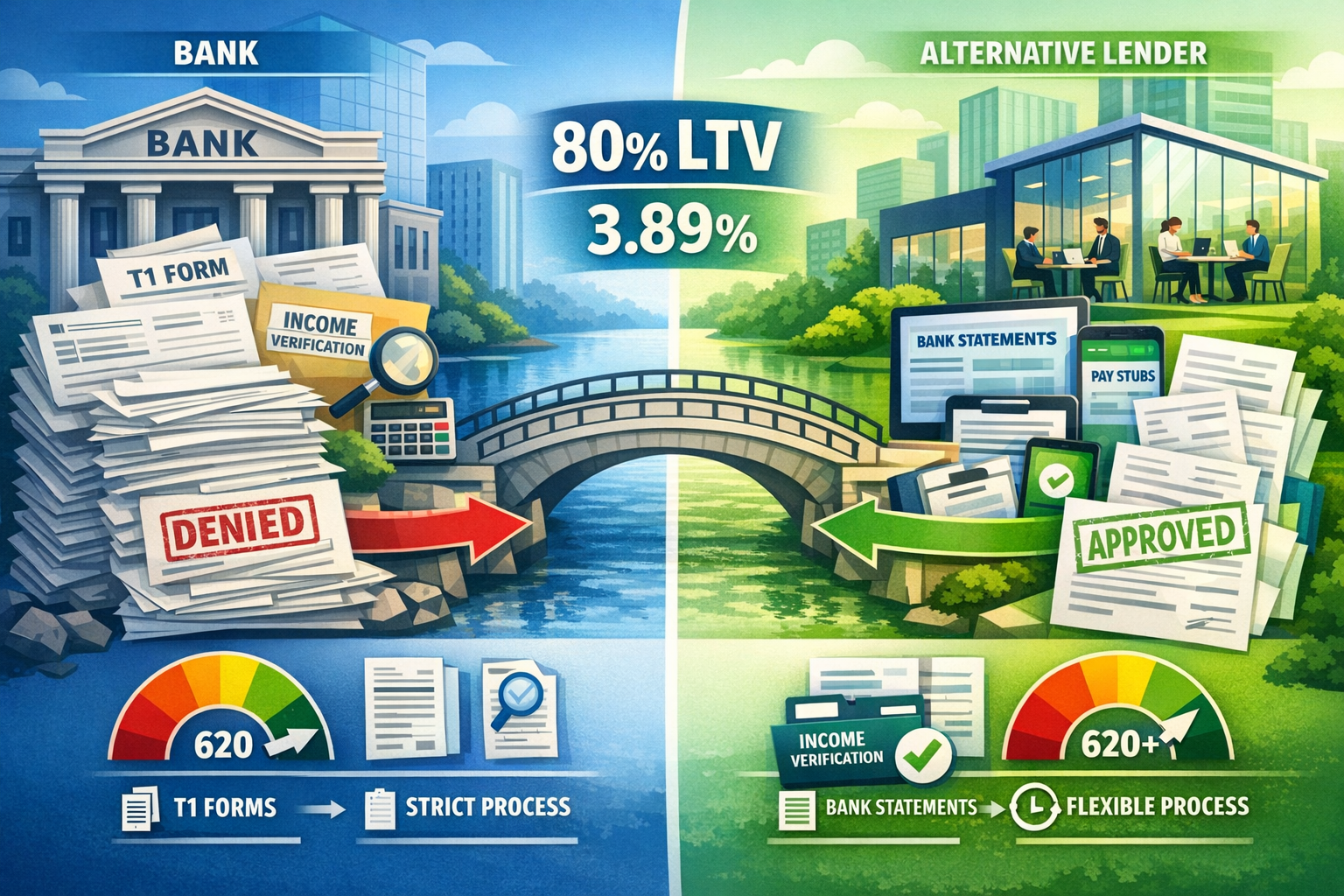
Not all lenders treat self-employed borrowers equally. Understanding which institutions offer the most flexibility for Self-Employed Toronto Borrowers: Securing 3.89% 2-Year Fixed Rates at 80% LTV Without Full 2-Year History can mean the difference between approval and rejection.
Top Flexible Lenders for Self-Employed Borrowers
🏦 Manulife Bank
Manulife has built a reputation for accommodating self-employed professionals through:
Bank Statement Programs: Accepts 6-12 months of business bank statements as primary income verification, calculating average monthly deposits to determine qualifying income.
Flexible Income Calculation: Uses gross deposits rather than net income after expenses, which often results in higher qualifying amounts for self-employed borrowers.
Streamlined Process: Reduced documentation requirements compared to traditional banks, with faster underwriting timelines.
🏦 Scotiabank
Scotiabank offers competitive programs for entrepreneurs:
Self-Employed Solutions: Specialized mortgage products designed specifically for business owners and independent contractors.
Relationship Banking: Existing Scotiabank business banking clients may receive preferential treatment and streamlined approval processes.
Flexible Verification: Accepts combination of bank statements, business financial statements, and single-year tax returns for borrowers without full two-year history.
🏦 Alternative and B-Lenders
When traditional banks decline applications, alternative lenders provide viable options:
Credit Unions: Often more flexible with self-employed borrowers, particularly those with established business banking relationships.
Monoline Lenders: Mortgage-only institutions like First National, MCAP, and RMG Mortgages frequently offer competitive rates with relaxed documentation requirements.
B-Lenders: While rates may be slightly higher (typically 0.5-1.5% above prime lenders), B-lenders specialize in non-traditional income verification and can approve borrowers who don’t meet strict criteria.
For those exploring alternative income verification methods, our article on bank statement mortgages for self-employed borrowers provides detailed insights.
Comparing Lender Requirements
| Lender Type | Min. Credit Score | Income Verification | Self-Employment History | Rate Premium |
|---|---|---|---|---|
| Major Banks | 680+ | T1 Generals (2 years) | 2+ years | None |
| Manulife/Scotia | 620+ | Bank statements/NOA | 1+ year | None to minimal |
| Credit Unions | 620+ | Flexible documentation | 1+ year | None to minimal |
| B-Lenders | 600+ | Very flexible | 6+ months | +0.5-1.5% |
The Mortgage Broker Advantage
Working with experienced mortgage brokers who specialize in self-employed clients offers significant advantages:
🎯 Lender Access: Brokers have relationships with dozens of lenders, including those not accessible to the general public.
📊 Application Strategy: They know which lenders are most likely to approve your specific situation, saving time and protecting your credit score from multiple inquiries.
💡 Documentation Guidance: Brokers help organize and present your financial information in the most favorable light.
🔄 Ongoing Support: They navigate the 2026 mortgage stress test requirements and advocate on your behalf throughout the approval process.
Maximizing Your Approval Chances: Strategic Tips and Common Pitfalls

Securing the best possible terms for Self-Employed Toronto Borrowers: Securing 3.89% 2-Year Fixed Rates at 80% LTV Without Full 2-Year History requires strategic preparation and awareness of common mistakes.
🎯 Strategic Preparation Tips
Optimize Your Income Presentation
Separate Business and Personal Finances: Maintain distinct bank accounts for business and personal use. Commingled funds create confusion and may reduce your qualifying income.
Time Your Application Strategically: Apply after your strongest income months or quarters. If your business is seasonal, time your application when bank statements show peak performance.
Minimize Business Expense Claims: While tax deductions reduce your tax burden, they also reduce your stated income. In the year before applying for a mortgage, consider claiming fewer discretionary expenses to show higher net income.
Document Add-Backs: Many business expenses (depreciation, vehicle expenses, home office) don’t represent actual cash outflows. Work with your accountant to document these “add-backs” that lenders may consider when calculating income.
Strengthen Your Financial Profile
📈 Boost Your Credit Score:
- Pay all bills on time for at least 6 months before applying
- Reduce credit card balances to below 30% of limits
- Avoid opening new credit accounts
- Dispute any errors on your credit report
💰 Increase Your Down Payment: While 20% down qualifies for 80% LTV, having additional funds demonstrates financial stability and may improve approval odds or secure better rates.
🏠 Choose the Right Property: Properties under $1 million (or $1.5 million for insured mortgages) in stable Toronto neighborhoods receive more favorable treatment than higher-risk properties[3].
📊 Reduce Debt-to-Income Ratio: Pay down existing debts before applying. Lenders calculate your total debt service (TDS) ratio, and lower existing obligations increase your qualifying amount.
⚠️ Common Pitfalls to Avoid
Documentation Mistakes
❌ Incomplete Bank Statements: Missing even one month creates red flags. Provide complete, consecutive statements for the requested period.
❌ Unexplained Large Deposits: Lenders scrutinize unusual deposits. Document the source of any large or irregular deposits (client payments, asset sales, transfers between your own accounts).
❌ Inconsistent Information: Ensure all documents tell the same story. Discrepancies between your mortgage application, tax returns, and bank statements trigger additional scrutiny.
❌ Poor Financial Organization: Disorganized or unprofessional documentation suggests poor business management. Present documents in a clear, organized manner.
Application Timing Errors
❌ Applying Too Soon: Rushing an application before you have adequate documentation or business history often results in rejection, which can impact future applications.
❌ Multiple Applications Simultaneously: Applying with multiple lenders independently creates multiple credit inquiries and can harm your credit score. Work with a broker who can shop your application to multiple lenders with a single inquiry.
❌ Ignoring the Stress Test: Even if you qualify at 3.89%, lenders must verify you can afford payments at a higher qualifying rate. Understand how the stress test impacts self-employed borrowers.
Real-World Success Strategies
Case Example: A Toronto-based freelance consultant with 18 months of self-employment successfully secured a 3.89% rate by:
- Providing 12 months of business bank statements showing consistent monthly deposits averaging $8,500
- Submitting one complete Notice of Assessment from their first year of self-employment
- Including three signed client contracts demonstrating ongoing work relationships
- Maintaining a credit score of 710
- Providing a 22% down payment (slightly above the minimum)
This strategic approach compensated for the lack of a full two-year history by demonstrating income stability, professional credibility, and financial responsibility.
For additional guidance on avoiding common mistakes, review our article on top 5 mistakes self-employed homebuyers make.
Working Within Amortization Limits
Remember that insurable mortgages at 3.89% require a maximum 25-year amortization[3]. This means higher monthly payments compared to 30-year amortizations, but significant interest savings over the life of the mortgage. Calculate whether the monthly payment fits comfortably within your budget before committing.
Understanding Rate Holds and Timing
Most lenders offer 90-120 day rate holds, protecting you from rate increases while you finalize your purchase. If rates drop during your hold period, many lenders will honor the lower rate. Time your pre-approval to coincide with your serious house-hunting period to maximize this protection.
Navigating the Mortgage Stress Test as a Self-Employed Borrower
The Canadian mortgage stress test requires all borrowers to qualify at a rate higher than their actual mortgage rate. For a 3.89% mortgage, you must demonstrate ability to afford payments calculated at approximately 5.89% (the contract rate plus 2%, or the Bank of Canada’s benchmark rate, whichever is higher).
How the Stress Test Affects Self-Employed Borrowers
Self-employed applicants face unique challenges with the stress test:
Income Volatility: Fluctuating income makes it harder to demonstrate consistent ability to afford higher payments.
Conservative Income Calculation: Lenders often average income over multiple years or use the lower of two years, which may not reflect current earning capacity.
Additional Scrutiny: Underwriters apply more conservative assumptions to self-employed income compared to salaried employees.
Strategies to Pass the Stress Test
✅ Demonstrate Income Growth: Show an upward trajectory in your business income over recent months or years.
✅ Minimize Other Debts: The stress test calculates total debt service, so reducing car payments, credit card balances, and other obligations increases your qualifying amount.
✅ Consider Co-Applicants: Adding a spouse or partner with stable income can significantly improve stress test results.
✅ Choose Shorter Amortizations: While this increases monthly payments, it demonstrates stronger financial capacity to lenders.
For comprehensive strategies, explore our guide on obtaining a mortgage when you’re self-employed.
Alternative Pathways: When Traditional Approval Isn’t Possible
Even with flexible lenders, some self-employed borrowers may not qualify for the 3.89% insured rate. Understanding alternative pathways ensures you still have options for homeownership.
Non-Insured Conventional Mortgages
With 20% down payment, you can access conventional (non-insured) mortgages that don’t require mortgage default insurance. These products often have:
More Flexible Documentation: Some lenders offer “stated income” programs for borrowers with strong credit and substantial down payments.
Slightly Higher Rates: Expect rates 0.25-0.50% higher than insured products, typically 4.15-4.50% in the current market.
No Property Value Limit: Unlike insured mortgages capped at $1.5 million, conventional mortgages have no upper property value limit.
Private Mortgage Options
For borrowers who need time to build their self-employment history or improve their financial profile, private mortgages offer short-term solutions:
Faster Approval: Private lenders focus primarily on property equity rather than income verification.
Higher Rates: Expect rates of 7-12%, significantly higher than conventional mortgages.
Bridge Financing: Use private financing for 1-2 years while building your business history, then refinance to conventional rates.
Learn more about innovative mortgage solutions for self-employed Canadians.
Building Toward Qualification
If you’re not quite ready for the 3.89% rate, focus on:
📊 Establishing Business History: Continue operating your business for at least 12-18 months with consistent income.
💳 Improving Credit: Work toward a 680+ credit score for maximum lender options.
💰 Increasing Savings: Build a larger down payment (25-30%) to access more flexible programs.
📄 Professional Accounting: Hire an accountant to prepare professional financial statements that present your income favorably.
Conclusion: Your Roadmap to 3.89% Success
Self-Employed Toronto Borrowers: Securing 3.89% 2-Year Fixed Rates at 80% LTV Without Full 2-Year History is not only possible in 2026—it’s increasingly common as lenders recognize the value and stability of entrepreneurial income. The key lies in strategic preparation, choosing the right lenders, and presenting your financial story effectively.
Your Action Plan
Step 1: Assess Your Readiness ✅
- Check your credit score (target 620+ for insurable rates)
- Calculate your available down payment (minimum 20%)
- Review your business income consistency over recent months
- Estimate your debt-to-income ratio
Step 2: Organize Documentation 📋
- Gather 6-12 months of business and personal bank statements
- Obtain your most recent Notice of Assessment
- Prepare business financial statements
- Collect business registration and licensing documents
- Document your down payment source
Step 3: Connect with Specialists 🤝
- Engage a mortgage broker experienced with self-employed borrowers
- Consult with your accountant about optimal income presentation
- Research flexible lenders like Manulife and Scotiabank
Step 4: Time Your Application Strategically ⏰
- Apply after your strongest income period
- Ensure all documentation is current and complete
- Allow 30-45 days for the approval process
Step 5: Prepare for the Stress Test 💪
- Calculate affordability at the qualifying rate (approximately 5.89%)
- Reduce other debts if necessary
- Consider co-applicants if needed
The Opportunity Is Now
With the Bank of Canada’s overnight rate at 2.25% and competitive pressure among lenders, 2026 represents an optimal time for self-employed Toronto borrowers to secure favorable mortgage terms[1]. The expansion of insurable mortgage limits to $1.5 million and increasing lender flexibility with documentation requirements have opened doors that were previously closed[3].
The 3.89% 2-year fixed rate at 80% LTV offers self-employed professionals the same competitive rates traditionally reserved for salaried employees—but only for those who prepare strategically and work with the right lending partners.
Don’t let the lack of a full two-year self-employment history hold you back from Toronto homeownership. With proper preparation, documentation, and guidance, you can join the growing number of entrepreneurs successfully securing competitive mortgage rates in 2026.
Ready to get started? Connect with a mortgage professional who specializes in self-employed borrowers and begin organizing your documentation today. Your path to homeownership at 3.89% starts with that first strategic step.
References
[1] Mortgage Report – https://rates.ca/mortgage-report
[2] Interest Rate Forecast – https://wowa.ca/interest-rate-forecast
[3] Mortgage Rates Toronto – https://citadelmortgages.ca/mortgage-rates-toronto/
 Previous Page