February 14, 2026
Buying Your First Home in Toronto’s 2026 Buyer’s Market: Step-by-Step Guide
Share this article:



Manzeel is an award-winning Mortgage Broker and the Owner of the Toronto-based mortgage, Everything Mortgages.
With 16 years of experience in the Canadian mortgage industry and a formal background in mortgage underwriting, Manzeel’s lending expertise gives him unique insight into whether a deal is feasible which empowers his clients to make more informed lending decisions faster.
He has been recognized as one of Canada’s Top 10 Mortgage Brokers by the national Canadian Mortgage Professionals (CMP) Association. Him and his team of 18 mortgage agents are proud to offer a mortgage experience that's built on honesty, trust, and integrity. He prides himself on the brokerage’s dedication to deliver an excellent client experience throughout the entire home loan process from pre-approval to post-funding.
Since moving to Toronto in 1998, Manzeel has successfully launched and scaled several businesses from the ground up, ranging from a mortgage brokerage and a vast real estate investment portfolio to a private financing eCommerce platform. He continues to be a leader in the real estate industry as he uses his analytical expertise to seek new real estate investment opportunities.
As a tech junkie and avid sports enthusiast, when Manzeel’s not working with clients, you can find him reading technology blogs, playing squash or watching tennis with his two boys.
{“cover”:”Professional landscape format (1536×1024) hero image featuring bold text overlay ‘Buying Your First Home in Toronto’s 2026 Buyer’s Market: Step-by-Step Guide’ in extra large 72pt white sans-serif font with dark shadow and semi-transparent navy overlay box, positioned in upper third. Background shows stunning Toronto skyline at dusk with CN Tower prominent, residential neighborhoods visible, ‘FOR SALE’ signs in foreground, real estate imagery. Foreground elements include house keys, mortgage documents, calculator subtly placed. Color scheme: deep navy blue, white, gold accents representing opportunity. High contrast, magazine cover quality, editorial style with professional real estate aesthetic. Composition follows rule of thirds with cityscape creating depth, conveying buyer opportunity and market advantage.”,”content”:[“Landscape format (1536×1024) detailed infographic showing Toronto’s 2026 buyer’s market statistics with visual data representation: large prominent text ‘$936,100’ with downward arrow showing 8% price decline, ‘5.8 months supply’ indicator with inventory bars, sales-to-listings ratio gauge at 28.6% in green buyer-favorable zone, split-screen comparison of 2022 peak vs 2026 current prices. Background features subtle Toronto neighborhood map with price heat zones cooling from red to blue. Clean financial aesthetic with charts, percentage annotations, data visualization elements. Modern color palette: navy, teal, white with red-to-green gradient showing market shift. Professional real estate market analysis style with clear typography and statistical emphasis.”,”Landscape format (1536×1024) step-by-step visual roadmap illustration showing the home buying journey in sequential stages: Stage 1 shows credit score improvement with upward trending graph and 680+ score target, Stage 2 displays mortgage pre-approval documents with calculator and rate comparison chart, Stage 3 features house hunting with Toronto neighborhood icons and property listings, Stage 4 shows negotiation scene with offer documents and price reduction symbols, Stage 5 depicts home inspection checklist with magnifying glass over house structure, Stage 6 shows closing documents with keys. Connected by flowing arrow path from left to right. Clean infographic style with icons, checkmarks, timeline elements. Color-coded stages in progressive blue shades. Professional, accessible design with clear visual hierarchy.”,”Landscape format (1536×1024) strategic planning scene showing financial preparation tools for first-time homebuyers: foreground displays FHSA and RRSP Home Buyers Plan documents with contribution amounts highlighted, calculator showing down payment calculations, credit report with score improvement timeline, mortgage stress test results chart, budget spreadsheet with income vs expenses. Background shows Toronto residential street with ‘SOLD’ sign and happy diverse couple holding house keys. Split composition with financial documents on left, aspirational homeownership imagery on right. Warm, encouraging color palette: forest green for savings, gold for achievement, soft blue for trust. Professional financial planning aesthetic with realistic document details, clean typography, motivational yet practical tone.”]

The Toronto real estate market has undergone a dramatic transformation. After years of bidding wars and skyrocketing prices, first-time buyers finally have the upper hand in 2026. With benchmark home prices dropping to $936,100—an 8% decline from last year and the lowest level since January 2021—the opportunity to enter the market has never been better.[3]
This comprehensive guide to Buying Your First Home in Toronto’s 2026 Buyer’s Market: Step-by-Step Guide will walk through every stage of the home buying process, from financial preparation to closing day. The current market conditions, including 5.8 months of inventory supply and a sales-to-new-listings ratio of just 28.6%, create unprecedented negotiating power for buyers willing to act strategically.[3]
Key Takeaways
✅ Market Advantage: Toronto’s buyer’s market offers 5.8 months of inventory supply and prices at five-year lows, giving first-time buyers significant negotiating leverage
✅ Financial Preparation: Optimize credit scores, maximize FHSA and RRSP contributions, and secure mortgage pre-approval before house hunting to strengthen your position
✅ Strategic Timing: Prices are expected to remain stable in the $1 million to $1.03 million range throughout 2026, with modest recovery not expected until 2027[5]
✅ Property Selection: Detached and semi-detached homes show more resilience than condos, which experienced a 26% sales decline in January 2026[3]
✅ Action Required: Act before market conditions shift—buyer advantages may diminish as interest rates stabilize and inventory normalizes
Understanding Toronto’s 2026 Buyer’s Market Dynamics
What Makes 2026 a Buyer’s Market?
A buyer’s market occurs when supply exceeds demand, giving purchasers greater negotiating power and choice. Toronto’s real estate landscape has shifted dramatically from the seller-dominated frenzy of 2021-2022 to a decidedly buyer-friendly environment in 2026.
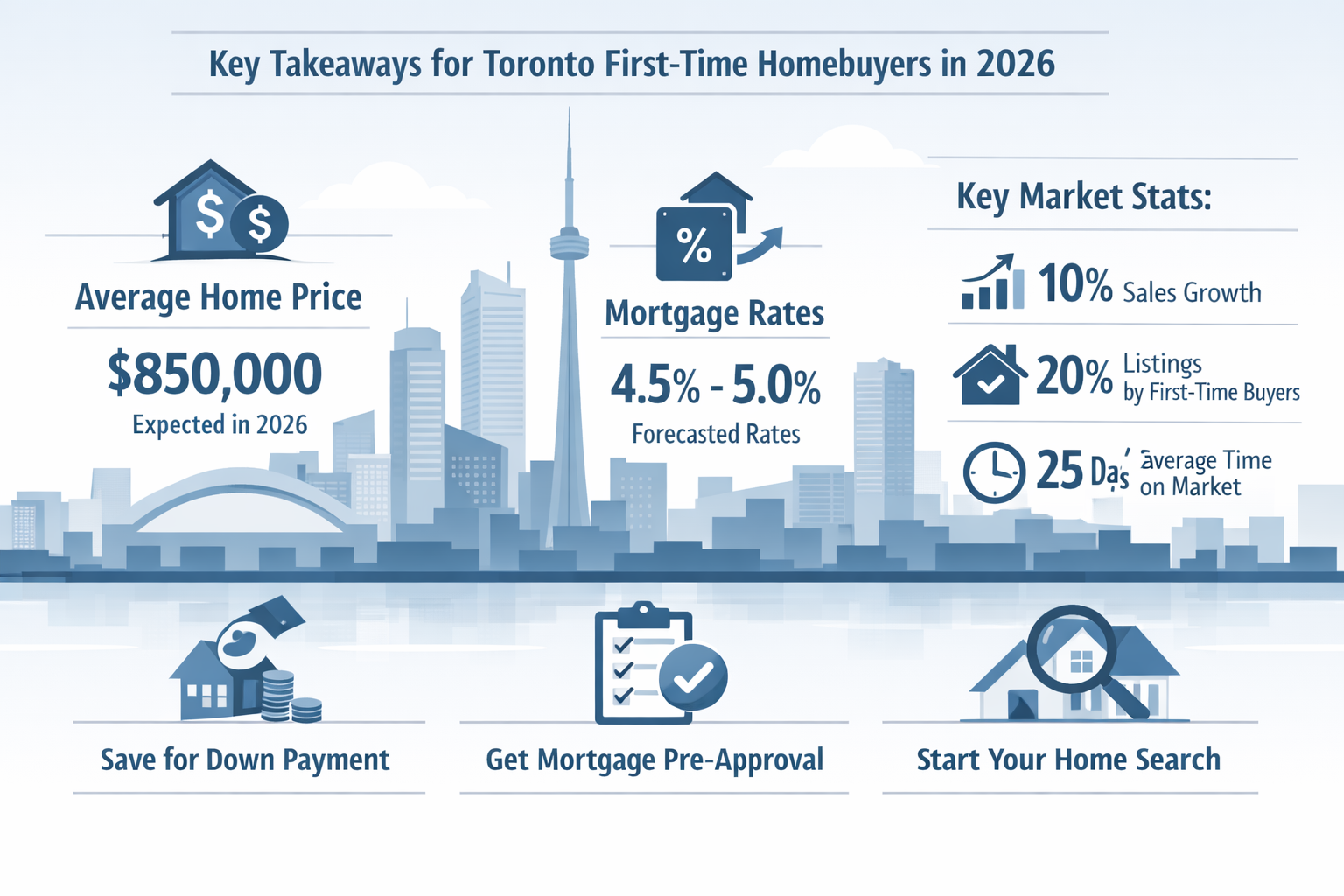
The sales-to-new-listings ratio stands at 28.6% as of January 2026, well below the 40-60% range that indicates a balanced market.[3] This metric reveals that for every 100 new properties listed, fewer than 29 are selling—a clear indication that buyers hold the cards.
Key market indicators include:
- 📉 Benchmark prices: Down to $936,100 (8% year-over-year decline)[3]
- 📊 Average home prices: $973,289, the first time below $1 million in five years[3]
- 🏘️ Inventory levels: 17,975 active listings (up 4.8% year-over-year)[3]
- ⏱️ Months of supply: 5.8 months, indicating substantial inventory surplus[3]
- 📉 Sales activity: Only 3,082 transactions in January 2026 (down 19.9%)[3]
Why Prices Have Declined
Several factors have converged to create this buyer-friendly environment:
Economic pressures have dampened buyer enthusiasm. Higher interest rates throughout 2023-2024, combined with inflation concerns and economic uncertainty, reduced purchasing power and buyer confidence. While rates have begun to stabilize in 2026, the psychological impact on buyers persists.
Oversupply in the condo market has been particularly pronounced. The condo sector experienced a 26% year-over-year sales decline in January 2026, the steepest drop across all property types.[3] Numerous newly completed units from the pandemic construction boom flooded the market just as investor demand evaporated.[1]
Shifting buyer preferences post-pandemic have also played a role. Many buyers now prioritize space and suburban locations over downtown condos, creating imbalances in different market segments.
Market Segment Performance
Not all property types have experienced equal declines. Understanding these differences is crucial for Buying Your First Home in Toronto’s 2026 Buyer’s Market: Step-by-Step Guide:
| Property Type | Year-over-Year Sales Change | Market Condition |
|---|---|---|
| Condos | -26% | Weakest segment, significant oversupply |
| Freehold Townhomes | -24% | Soft demand, moderate inventory |
| Semi-Detached | -20% | More stable than condos |
| Detached Homes | -14% | Most resilient category |
In the City of Toronto specifically, the median price fell to $749,500, down 6.3% year-over-year, with overall prices down 6.5% and the MLS house price index down 8%.[2][3]
What to Expect Through 2026 and Beyond
The Toronto Regional Real Estate Board (TRREB) projects that GTA average prices will remain stable in the $1 million to $1.03 million range throughout 2026.[5] This forecast suggests:
- Prices are unlikely to drop significantly further
- A dramatic surge in prices is also unlikely
- The market will remain relatively flat, favoring buyers
Looking further ahead, prices are forecast to remain flat to slightly declining through the first half of 2026, with potential 3-4% drops in pricier GTA areas, followed by gradual improvement around 2027.[1] However, a full recovery to 2022 peak prices is not expected until 2029-2030.[1]
TRREB expects 60,000-70,000 total home sales in 2026, roughly flat with recent years, indicating continued buyer caution but stable transaction volumes.[4]
Step 1: Assess Your Financial Readiness
Before beginning your home search, establishing a solid financial foundation is essential. This preparation will strengthen your negotiating position and ensure you can act quickly when the right property appears.
Calculate Your True Budget
Understanding how much house you can afford involves more than just the purchase price. Consider these components:
Down payment requirements:
- Minimum 5% for homes under $500,000
- 5% on the first $500,000 + 10% on the portion between $500,000-$999,999
- Minimum 20% for homes $1 million and above
With Toronto’s average price at $973,289, most first-time buyers will need approximately $72,914 minimum down payment (5% on first $500,000 = $25,000 + 10% on remaining $473,289 = $47,329).
Monthly carrying costs to budget for:
- 🏠 Mortgage principal and interest payments
- 🏛️ Property taxes (typically 0.6-1% of home value annually in Toronto)
- 🔥 Home insurance ($1,000-$2,000+ annually)
- 💡 Utilities (heat, electricity, water)
- 🏗️ Maintenance and repairs (budget 1% of home value annually)
- 🏘️ Condo fees (if applicable, often $400-$800+ monthly)
Closing costs typically add 1.5-4% of the purchase price:
- Land transfer tax (both provincial and municipal in Toronto)
- Legal fees ($1,500-$3,000)
- Home inspection ($400-$600)
- Title insurance ($200-$400)
- Moving expenses
- Utility connection fees
Optimize Your Credit Score
Your credit score directly impacts mortgage approval and the interest rate you’ll receive. Understanding how to improve your credit score in Canada is crucial before applying for a mortgage.
Target credit score benchmarks:
- 680+: Minimum for most conventional mortgages
- 700+: Access to better rates and terms
- 750+: Optimal rates and maximum lender flexibility
Quick credit improvement strategies:
- Pay all bills on time for at least 6 months before applying
- Reduce credit card balances to below 30% of limits
- Avoid opening new credit accounts
- Check credit reports for errors and dispute inaccuracies
- Keep old credit accounts open to maintain credit history length
Maximize Government Programs and Savings Vehicles
First-time buyers in 2026 have access to powerful savings tools that can significantly boost down payment capacity.
First Home Savings Account (FHSA):
The FHSA is a game-changing program for first-time buyers. Learn more about the First Home Savings Account and how to maximize its benefits.
- Contribute up to $8,000 annually (lifetime limit of $40,000)
- Contributions are tax-deductible (like RRSPs)
- Withdrawals for home purchase are tax-free (like TFSAs)
- Investment growth is tax-sheltered
- Can be combined with RRSP Home Buyers’ Plan
RRSP Home Buyers’ Plan (HBP):
The RRSP Home Buyers’ Plan allows you to withdraw up to $35,000 from your RRSPs tax-free for a home purchase (or $70,000 for couples).
- Funds must be repaid over 15 years
- No interest charged on withdrawals
- RRSPs must be held for at least 90 days before withdrawal
- Can be used in conjunction with FHSA
First-Time Home Buyer Incentive:
While this program has limitations, it may provide 5-10% of the home’s purchase price as a shared equity mortgage with the government, reducing monthly payments.
Understanding Mortgage Stress Testing
All mortgage applicants must qualify under the mortgage stress test, which ensures you can afford payments at a higher rate than you’ll actually pay. Understanding stress testing in the Canadian mortgage market is essential for realistic budgeting.
You must qualify at the greater of:
- Your contract rate + 2%, OR
- 5.25% (the benchmark qualifying rate)
This means if you’re offered a 5% mortgage rate, you’ll need to prove you can afford payments at 7%. This significantly reduces your maximum borrowing capacity but protects you from future rate increases.
Create a Savings Timeline
With prices stable through 2026, you have time to build your down payment strategically:
Sample 12-month savings plan for a $973,289 home:
- Target down payment: $73,000 (7.5%)
- Current savings: $30,000
- Needed: $43,000
- Monthly savings required: $3,583
Acceleration strategies:
- Maximize FHSA contributions for tax refund
- Reduce discretionary spending
- Take on side income
- Delay major purchases
- Consider gifts from family (ensure proper documentation for lenders)
Step 2: Secure Mortgage Pre-Approval
Obtaining mortgage pre-approval before house hunting is one of the most strategic moves in Buying Your First Home in Toronto’s 2026 Buyer’s Market: Step-by-Step Guide. In a buyer’s market, pre-approval demonstrates you’re a serious purchaser and enables you to move quickly when you find the right property.
Why Pre-Approval Matters in 2026
Negotiating leverage: Sellers are more likely to accept offers from pre-approved buyers, especially in a slower market where they want certainty of closing.
Budget clarity: Pre-approval tells you exactly how much you can borrow, preventing wasted time viewing properties outside your range.
Rate protection: Most pre-approvals lock in your interest rate for 90-120 days, protecting you if rates rise during your search.
Faster closing: With financing already arranged, you can close more quickly, which may be attractive to sellers.
Pre-Approval vs. Pre-Qualification
Understanding the difference is important:
Pre-qualification is an informal estimate based on self-reported information. It carries little weight with sellers and doesn’t guarantee approval.
Pre-approval involves a full application with income verification, credit check, and conditional approval subject to property appraisal. This is what you need.
Choosing Between Fixed and Variable Rates
The mortgage rate environment in 2026 presents interesting choices for first-time buyers. Consider the implications of fixed vs variable rates for Toronto first-time buyers in the current market.
Fixed-rate mortgages:
- ✅ Payment certainty for the entire term
- ✅ Protection if rates rise
- ❌ Higher initial rate than variable
- ❌ Less flexibility if rates fall
Variable-rate mortgages:
- ✅ Typically lower initial rate
- ✅ Benefit if rates decline further
- ❌ Payment uncertainty
- ❌ Risk if rates increase
Given the expectation that rates may stabilize or decline modestly in 2026, first-time buyers with stable income and some risk tolerance might favor variable rates, while those prioritizing payment certainty may prefer fixed rates.
Understanding Amortization Options
First-time buyers purchasing newly constructed homes may be eligible for 30-year amortization, which reduces monthly payments but increases total interest paid over the life of the mortgage.
25-year amortization (standard):
- Higher monthly payments
- Less total interest paid
- Faster equity building
30-year amortization (new builds only for first-time buyers):
- Lower monthly payments (approximately 10% reduction)
- More total interest paid
- Easier to qualify under stress test
- Slower equity building
Documents Required for Pre-Approval
Gather these documents before meeting with your mortgage broker or lender:
Employment and income verification:
- Recent pay stubs (last 2-3 months)
- T4 slips or Notice of Assessment (last 2 years)
- Employment letter confirming position and salary
- For self-employed: 2 years of financial statements and tax returns
Asset documentation:
- Bank statements (last 90 days for all accounts)
- RRSP/FHSA statements
- Investment account statements
- Gift letters (if receiving down payment assistance)
Identification and credit:
- Government-issued photo ID
- Void cheque or banking information
- Authorization for credit check
Debt information:
- Credit card statements
- Auto loan details
- Student loan balances
- Any other outstanding debts
For a complete checklist, review this mortgage document checklist.
Working with a Mortgage Broker vs. Bank
Mortgage brokers offer several advantages for first-time buyers:
- Access to multiple lenders (banks, credit unions, alternative lenders)
- Can shop rates on your behalf
- Often find better rates than going directly to banks
- Provide guidance through the entire process
- No cost to you (paid by lenders)
Banks may be suitable if:
- You have an existing relationship with preferred rates
- You value the convenience of one-stop banking
- Your financial situation is straightforward
In Toronto’s 2026 buyer’s market, working with an experienced mortgage broker often provides the best combination of rates, options, and expert guidance.
Pre-Approval Timeline
Week 1-2: Gather all required documents and organize your financial information.
Week 2-3: Meet with mortgage broker or lender, submit application, undergo credit check.
Week 3-4: Receive pre-approval letter with maximum borrowing amount and rate hold.
Next 90-120 days: Begin house hunting with confidence, knowing your budget and having rate protection.
Pro Tip: Get pre-approved before you start seriously house hunting. This prevents the disappointment of falling in love with a home you can’t afford and positions you as a serious buyer in negotiations.
Step 3: Define Your Home Search Criteria
With financing secured, it’s time to translate your budget into specific property criteria. In Toronto’s buyer’s market, you have the luxury of being selective—use it wisely.
Location Considerations
Toronto’s diverse neighborhoods offer vastly different lifestyles, amenities, and price points. Consider these factors:
Commute and transportation:
- Proximity to work or business districts
- Access to TTC subway, streetcar, or bus routes
- GO Transit connections for regional commuting
- Parking availability and costs
Lifestyle and amenities:
- Walkability and neighborhood character
- Proximity to grocery stores, restaurants, cafes
- Parks, recreation facilities, and green space
- Entertainment and cultural venues
Schools and family considerations:
- School district quality and rankings
- Daycare and childcare availability
- Family-friendly parks and programs
- Safety and community atmosphere
Investment potential:
- Neighborhood development plans
- Historical price appreciation
- Rental demand (if considering future rental income)
- Infrastructure improvements planned
Price variations by area (approximate 2026 ranges):
- Downtown Toronto condos: $600,000-$900,000
- Midtown houses: $1,200,000-$2,000,000+
- East York/Leslieville: $900,000-$1,500,000
- Etobicoke: $800,000-$1,400,000
- North York: $700,000-$1,600,000
- Scarborough: $600,000-$1,100,000
Property Type Decision
Each property type offers distinct advantages and challenges:
Detached homes:
- ✅ Maximum privacy and space
- ✅ Land ownership and yard
- ✅ Most resilient in 2026 market (only -14% sales decline)[3]
- ❌ Highest purchase price
- ❌ Most maintenance responsibility
- ❌ Higher property taxes and utilities
Semi-detached homes:
- ✅ More affordable than detached
- ✅ Still offers yard space
- ✅ Relatively stable market performance (-20% sales decline)[3]
- ❌ Shared wall with neighbor
- ❌ Less privacy than detached
Townhomes:
- ✅ Balance of space and affordability
- ✅ Often includes small yard or patio
- ❌ Experiencing softness (-24% sales decline)[3]
- ❌ Condo fees often apply
- ❌ Less privacy
Condos:
- ✅ Most affordable entry point
- ✅ Low maintenance (building handles exterior)
- ✅ Amenities (gym, pool, concierge)
- ✅ Strongest buyer leverage (weakest market segment at -26%)[3]
- ❌ Monthly condo fees ($400-$800+)
- ❌ Less space and privacy
- ❌ Special assessments possible
- ❌ Oversupply concerns in 2026[1]
Given the market dynamics, condos present the greatest negotiating opportunities but require careful due diligence on building finances and future assessment risks. Detached and semi-detached homes offer more stability but less immediate price negotiation potential.
Must-Haves vs. Nice-to-Haves
Create two lists to guide your search:
Must-haves (non-negotiable):
- Number of bedrooms/bathrooms (minimum)
- Location/maximum commute time
- Budget ceiling
- Parking (if you own a car)
- Specific accessibility needs
Nice-to-haves (flexible):
- Updated kitchen/bathrooms
- Finished basement
- Outdoor space size
- Home office space
- Specific architectural style
- Move-in ready condition
In a buyer’s market, you may find properties that check both lists, but maintaining flexibility on nice-to-haves expands your options significantly.
New Construction vs. Resale
New construction advantages:
- Everything is brand new (no immediate repairs)
- Builder warranties (typically 1-2-7 years)
- Modern layouts and energy efficiency
- Potential for 30-year amortization for first-time buyers
- Customization options (if bought pre-construction)
New construction disadvantages:
- Higher price per square foot
- Potential construction delays
- Unestablished neighborhoods
- Smaller lot sizes
- Development charges and levies
Resale advantages:
- Established neighborhoods with mature trees
- Often larger lots and rooms
- Immediate possession
- Can see exact condition before purchase
- More negotiating room in 2026 market
Resale disadvantages:
- Potential for immediate repairs/updates needed
- Older systems (HVAC, electrical, plumbing)
- Less energy efficient
- May need renovations to suit your taste
Setting Up Property Alerts
Maximize your search efficiency with technology:
MLS listings: Work with a real estate agent for access to full MLS data and automated alerts based on your criteria.
Online platforms: Set up alerts on Realtor.ca, Zolo, HouseSigma for properties matching your parameters.
Neighborhood targeting: Focus alerts on specific postal codes or neighborhoods you’ve identified as priorities.
Price range strategy: Set alerts slightly above your maximum budget to see what additional features cost, helping refine your priorities.
Step 4: Assemble Your Professional Team
Successfully navigating Buying Your First Home in Toronto’s 2026 Buyer’s Market: Step-by-Step Guide requires expert guidance. Building the right team provides crucial support through each stage.
Real Estate Agent Selection
A buyer’s agent represents your interests throughout the transaction. In a buyer’s market, their negotiation skills become especially valuable.
What to look for:
- Experience with first-time buyers
- Deep knowledge of your target neighborhoods
- Strong negotiation track record
- Availability and responsiveness
- Compatible communication style
- Positive client reviews and references
Questions to ask potential agents:
- How many first-time buyers have you worked with in the past year?
- What’s your average negotiation discount from list price in 2026?
- How do you handle multiple offers or bidding situations?
- What’s your approach to property valuation?
- How will you communicate with me throughout the process?
Buyer representation agreement: Your agent will ask you to sign an agreement specifying the relationship duration and their commission (typically paid by the seller). Read this carefully and ensure you’re comfortable with the terms.
Mortgage Broker or Lender
If you haven’t already secured pre-approval, choosing the right mortgage professional is critical.
Mortgage broker benefits:
- Access to 20+ lenders
- Rate shopping on your behalf
- Expert guidance on product selection
- No cost to you (lender-paid)
- Ongoing support through closing
When to use a bank directly:
- Existing relationship with preferential rates
- Simple financial situation
- Strong preference for specific institution
Home Inspector
Once you’ve found a property, a professional home inspection is essential. Never waive this condition, even in a buyer’s market.
What inspectors examine:
- Structural integrity (foundation, framing)
- Roof condition and remaining lifespan
- Electrical systems and code compliance
- Plumbing and water systems
- HVAC systems and efficiency
- Insulation and ventilation
- Evidence of water damage or mold
- Pest infestations
Choosing an inspector:
- Verify certification (OAHI, InterNACHI)
- Request sample reports
- Check reviews and references
- Ensure errors and omissions insurance
- Ask about inspection scope and duration
- Typical cost: $400-$600 for standard home
Real Estate Lawyer
A real estate lawyer handles the legal aspects of your purchase, from reviewing contracts to completing the title transfer.
Key responsibilities:
- Review and explain purchase agreement
- Conduct title search
- Handle mortgage registration
- Calculate and pay land transfer taxes
- Manage funds transfer on closing
- Register deed in your name
- Provide title insurance
Selecting a lawyer:
- Real estate specialization
- Transparent fee structure ($1,500-$3,000 typical)
- Clear communication
- Recommendations from your agent or broker
- Availability around your closing timeline
Understanding land transfer taxes is crucial, as Toronto buyers pay both provincial and municipal land transfer tax, significantly impacting closing costs.
Insurance Broker
Home insurance is mandatory for mortgage approval. An insurance broker can shop multiple providers for the best coverage and rates.
Coverage types needed:
- Property insurance (dwelling and contents)
- Liability coverage
- Additional living expenses
- Optional: sewer backup, overland flood protection
Cost factors:
- Home age and construction type
- Location and claims history
- Coverage amount and deductible
- Security features (alarm, fire suppression)
Start shopping for insurance once you have a firm offer accepted, as you’ll need proof of coverage before closing.
Step 5: House Hunting Strategy
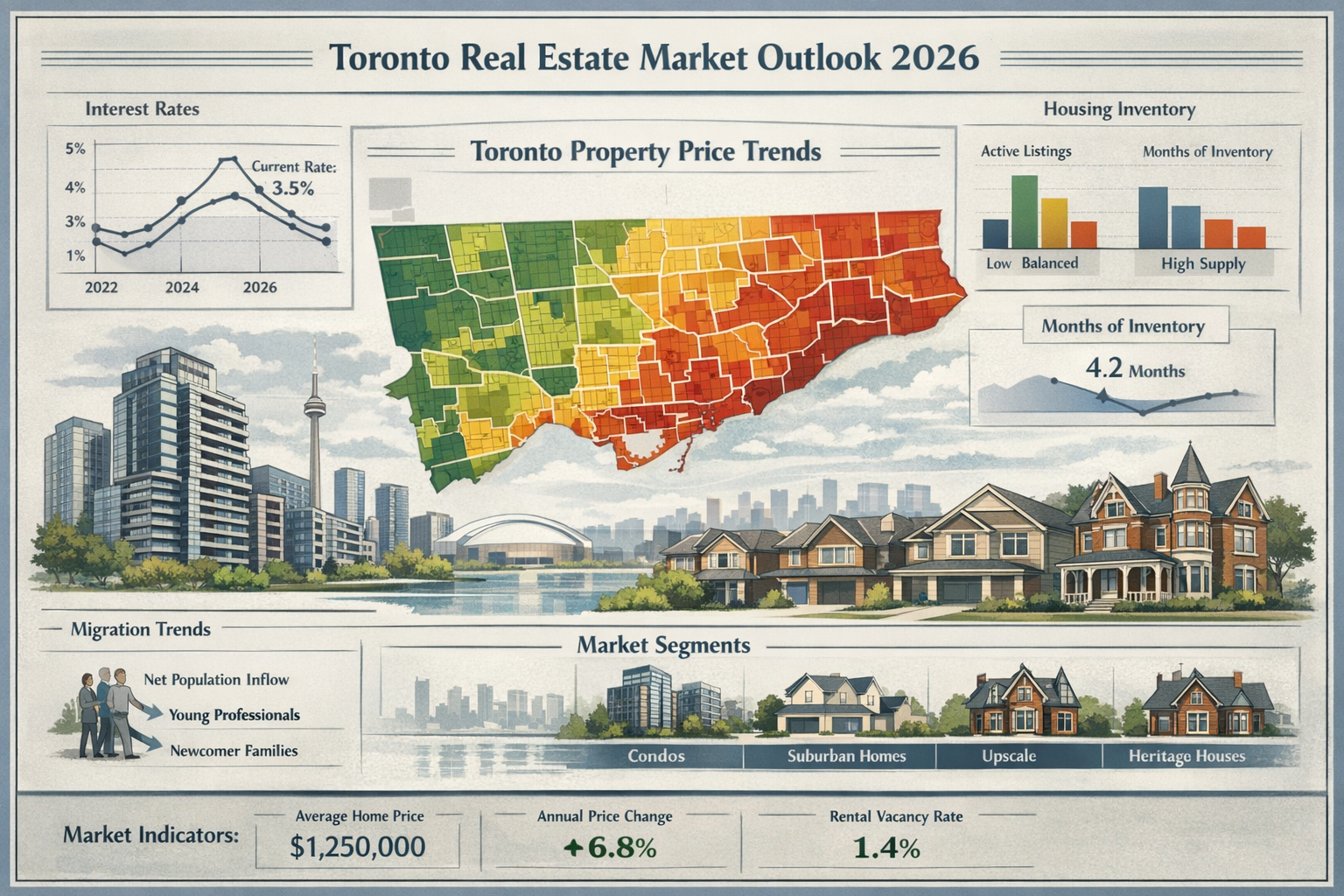
With your team assembled and criteria defined, it’s time to begin actively searching. Toronto’s 2026 buyer’s market rewards patience and strategic thinking.
Viewing Properties Efficiently
Initial online screening: Use listing photos, virtual tours, and neighborhood research to create a shortlist of properties worth viewing in person.
In-person viewing checklist:
- 📱 Take photos and videos (with agent permission)
- 📝 Note first impressions and gut feelings
- 🔍 Look beyond staging to see actual condition
- 💡 Test light switches, faucets, appliances
- 🚪 Open closets, cabinets, check storage
- 👃 Notice any unusual odors (moisture, mold, pets)
- 👂 Listen for noise from neighbors, traffic, mechanical systems
- 🏘️ Walk the neighborhood at different times
- 🚗 Test your commute from the property
Red flags to watch for:
- Fresh paint covering potential issues
- Musty odors suggesting moisture problems
- Uneven floors or cracks (foundation concerns)
- Outdated electrical (knob-and-tube, aluminum wiring)
- Evidence of DIY work without permits
- Neighborhood decline or neglect
- Excessive noise or traffic
Evaluating Property Value
In a declining market, determining fair value is crucial to avoid overpaying.
Comparative Market Analysis (CMA): Your agent will provide recent sales of comparable properties in the area, showing what similar homes actually sold for (not listing prices).
Key metrics to analyze:
- Price per square foot
- Days on market (longer suggests weaker demand)
- List price vs. sold price ratio
- Recent price reductions
- Seasonal trends
Online tools: Platforms like HouseSigma provide historical pricing data, helping you identify properties that have been relisted or reduced multiple times—prime negotiation opportunities.
Appraisal consideration: Remember that your lender will order an appraisal. If the appraised value comes in below your offer price, you may need to renegotiate or increase your down payment to cover the gap.
Timing Your Purchase
Seasonal patterns: Toronto real estate traditionally slows in winter (November-February) and peaks in spring (March-May). Buying in slower months may provide additional negotiating leverage.
Market momentum: With prices expected to remain stable through 2026, there’s no urgency to rush.[5] Take time to find the right property rather than settling due to fear of missing out.
Interest rate considerations: Monitor Bank of Canada policy decisions that may impact mortgage rates during your search.
Attending Open Houses
Open houses provide valuable opportunities beyond just viewing properties:
Information gathering: Chat with listing agents about seller motivation, time on market, and previous offers.
Neighborhood research: Visit multiple open houses in target areas to understand pricing and availability.
Practice and comparison: Viewing many properties helps calibrate your expectations and refine your criteria.
Competitive intelligence: Observe other buyers’ interest levels and questions to gauge demand.
Step 6: Making a Strategic Offer
When you’ve found the right property, crafting a competitive yet strategic offer is crucial in Buying Your First Home in Toronto’s 2026 Buyer’s Market: Step-by-Step Guide.
Offer Components
A purchase offer includes several key elements:
Purchase price: Your initial offer amount, typically below asking in a buyer’s market.
Deposit: Usually 5% of purchase price, held in trust and applied to your down payment at closing.
Conditions (subjects): Contingencies that must be satisfied for the offer to be binding:
- Financing approval
- Home inspection
- Review of condo documents (if applicable)
- Sale of current home (if applicable)
- Title search
Closing date: When ownership transfers and you take possession (typically 30-90 days from acceptance).
Inclusions/exclusions: What stays with the property (appliances, fixtures, window coverings) and what the seller keeps.
Irrevocable date: Deadline for seller to accept, reject, or counter your offer (typically 24-48 hours).
Pricing Strategy in a Buyer’s Market
With the sales-to-listings ratio at 28.6% and 5.8 months of inventory,[3] buyers have significant negotiating power in 2026.
Starting offer guidelines:
- Properties listed under 30 days: 5-10% below asking
- Properties listed 30-60 days: 10-15% below asking
- Properties listed 60+ days: 15-20% below asking
- Properties with price reductions: 10-20% below current asking
Factors supporting lower offers:
- Multiple price reductions
- Long days on market (60+ days)
- Motivated seller circumstances (relocation, estate sale, divorce)
- Property condition issues
- Declining neighborhood trends
- Comparable sales showing lower prices
Factors supporting stronger offers:
- Multiple competing buyers
- Excellent property condition
- Desirable location/features
- Recent comparable sales at similar prices
- Seller has backup options
Conditional vs. Unconditional Offers
Conditional offers include subjects that must be satisfied:
✅ Advantages:
- Protect you from unforeseen issues
- Allow professional inspection
- Ensure financing approval
- Provide exit strategy if problems arise
❌ Disadvantages:
- Less attractive to sellers
- May lose to unconditional offer
Unconditional offers have no conditions:
✅ Advantages:
- More attractive to sellers
- Stronger negotiating position
- Faster closing possible
❌ Disadvantages:
- Significant risk if issues discovered
- No financing protection
- Legally binding immediately
Recommended approach in 2026: Given the buyer’s market conditions, insist on inspection and financing conditions. Sellers have less leverage to demand unconditional offers when inventory is high and sales are slow.
Negotiation Tactics
Information is power: Research the seller’s situation through your agent. Are they relocating? How long has the property been listed? Have there been previous offers?
Don’t show your hand: Avoid revealing your maximum budget or desperation to the listing agent.
Be prepared to walk away: The best negotiating position is genuine willingness to continue searching if terms aren’t favorable.
Counter-offer strategy: Expect back-and-forth negotiation. Plan your escalation strategy in advance with your agent.
Non-price concessions: Consider negotiating:
- Extended closing date
- Included appliances or furniture
- Seller covering closing costs
- Repairs or credits for issues
- Early possession for renovations
Multiple Offer Situations
While less common in 2026’s buyer’s market, multiple offers still occur for exceptional properties.
Strategies when competing:
- Submit your best offer upfront (less room for escalation)
- Include strong deposit (shows commitment)
- Flexible closing date matching seller’s needs
- Personal letter to seller (emotional appeal)
- Minimal conditions (if you’ve done due diligence)
- Escalation clause (offer to beat competing offers by specific amount up to maximum)
When to walk away:
- Bidding war pushes price significantly above market value
- You’re stretching beyond comfortable budget
- Emotional decision-making overrides financial prudence
- Property has concerning issues that others are overlooking
Step 7: Due Diligence and Inspections
Once your offer is accepted, the due diligence period begins. This is your opportunity to verify the property’s condition and ensure you’re making a sound investment.
Home Inspection Process
Scheduling: Book your inspector immediately after offer acceptance, as condition periods are typically short (5-10 days).
Attending the inspection: Always attend in person. This provides invaluable education about your future home’s systems and maintenance needs.
What inspectors examine:
- Roof (condition, age, remaining lifespan)
- Foundation and structure
- Electrical systems and panel
- Plumbing and water heater
- HVAC systems
- Insulation and ventilation
- Windows and doors
- Grading and drainage
- Interior and exterior condition
Understanding the report: Inspectors categorize issues by severity:
- Safety hazards: Immediate attention required
- Major defects: Significant repairs needed soon
- Minor issues: Routine maintenance items
- Recommendations: Future upgrades or monitoring
Common issues in Toronto homes:
- Aging roofs (20-25 year lifespan)
- Knob-and-tube wiring in older homes
- Foundation cracks and water infiltration
- Outdated HVAC systems
- Aluminum wiring (insurance concerns)
- Asbestos in older homes
- Basement moisture and mold
Specialized Inspections
Depending on the home inspection findings, additional specialized inspections may be warranted:
Structural engineer: For foundation concerns, major cracks, or structural modifications.
Electrical inspection: For outdated or unsafe wiring systems.
Plumbing inspection: For sewer line issues, old piping, or water pressure problems.
Mold inspection: If evidence of water damage or musty odors.
HVAC specialist: For aging or malfunctioning heating/cooling systems.
Pest inspection: For evidence of termites, carpenter ants, or rodents.
Condo-Specific Due Diligence
If purchasing a condo, additional review is essential:
Status Certificate: Request and review this document (typically $100 fee), which includes:
- Condo corporation financial statements
- Reserve fund status
- Pending special assessments
- Bylaw and rules
- Insurance coverage
- Meeting minutes
- Pending litigation
Red flags in status certificates:
- Low reserve fund (under 25% funded)
- Announced or pending special assessments
- Increasing condo fees without corresponding improvements
- Deferred maintenance issues
- High percentage of rental units (affects financing)
- Ongoing litigation
- Insurance claims or coverage gaps
Condo corporation health: Review financial statements for:
- Operating surplus or deficit
- Adequate reserve contributions
- Reasonable expenses
- Proper insurance coverage
Given the condo oversupply in 2026,[1] extra scrutiny of building finances is crucial to avoid purchasing into a building with assessment or financial risks.
Responding to Inspection Findings
After receiving the inspection report, you have several options:
1. Proceed as planned: If issues are minor and expected for the property’s age/price.
2. Request repairs: Ask seller to fix specific issues before closing.
3. Negotiate price reduction: Request credit or price reduction to cover repair costs.
4. Renegotiate terms: Adjust closing date or other terms based on findings.
5. Withdraw offer: If major issues make the property unsuitable or unaffordable (within condition period).
Negotiation approach: Provide the inspection report to the seller and request specific remedies. In a buyer’s market, sellers are often willing to negotiate rather than risk losing the sale and relisting.
Prioritize safety and major systems: Focus negotiations on significant issues (roof, foundation, electrical, plumbing) rather than cosmetic concerns.
Step 8: Finalizing Financing
With inspections complete and any renegotiations settled, it’s time to finalize your mortgage.
Converting Pre-Approval to Approval
Your lender will require:
Property appraisal: The lender orders an independent appraisal to confirm the property value supports the loan amount. If the appraisal comes in low, you may need to:
- Renegotiate the purchase price
- Increase your down payment to cover the gap
- Find alternative financing
Updated financial documentation: Provide current pay stubs, bank statements, and confirmation that your financial situation hasn’t changed since pre-approval.
Property insurance: Obtain home insurance quotes and provide proof of coverage to your lender. The lender must be named on the policy.
Final review: The lender reviews all documentation and issues a formal commitment letter outlining:
- Approved loan amount
- Interest rate and term
- Amortization period
- Conditions to be met before closing
- Closing date
Understanding Your Mortgage Terms
Interest rate: The percentage charged on your loan, either fixed or variable.
Term: The length of time your rate and conditions are locked in (typically 1-5 years). At term end, you renew or refinance.
Amortization: The total time to pay off the mortgage completely (typically 25 years, or 30 years for first-time buyers on new builds).
Payment frequency: Options include:
- Monthly (12 payments/year)
- Bi-weekly (26 payments/year)
- Accelerated bi-weekly (26 payments/year at higher amount, pays off mortgage faster)
- Weekly
Prepayment privileges: Most mortgages allow:
- Annual lump sum payments (typically 10-20% of original principal)
- Payment increases (typically 10-20% annually)
- These features help you pay off your mortgage faster without penalty
Portability: The ability to transfer your mortgage to a new property if you move before term end, preserving your rate.
Penalty calculation: Understand how penalties are calculated if you need to break your mortgage:
- Variable: Typically 3 months’ interest
- Fixed: Greater of 3 months’ interest or Interest Rate Differential (IRD), which can be substantial
Mortgage Insurance (CMHC, Sagen, Canada Guaranty)
If your down payment is less than 20%, you’ll need mortgage default insurance:
Premium rates (added to mortgage amount):
- 5-9.99% down: 4.00% premium
- 10-14.99% down: 3.10% premium
- 15-19.99% down: 2.80% premium
Example: $973,289 purchase with 10% down ($97,329)
- Mortgage amount: $875,960
- Insurance premium (3.10%): $27,155
- Total mortgage with insurance: $903,115
Benefits of mortgage insurance:
- Enables homeownership with smaller down payment
- Typically lower interest rates than uninsured mortgages
- Protects lender (and indirectly you) from default
Final Mortgage Commitment
Once all conditions are satisfied, your lender issues a final mortgage commitment, confirming:
- Loan approval
- Final amount
- Rate and terms
- Closing requirements
- Funding confirmation
Provide this immediately to your lawyer, who will coordinate with the lender for closing day funding.
Step 9: Preparing for Closing
The final weeks before closing involve coordination between multiple parties and careful preparation.
Working with Your Lawyer
Your real estate lawyer manages the legal aspects of closing:
Title search: Verifies the seller has clear title to transfer and identifies any liens, encumbrances, or restrictions.
Reviewing documents: Your lawyer explains:
- Statement of adjustments (property tax, utility, condo fee prorations)
- Mortgage documents requiring your signature
- Transfer documents
- Title insurance
Calculating closing costs: Your lawyer provides a final accounting of all costs:
- Remaining down payment
- Land transfer tax (provincial and municipal in Toronto)
- Legal fees
- Title insurance
- Property tax adjustments
- Utility adjustments
- Condo fee adjustments (if applicable)
- Moving expenses
For detailed guidance on this phase, review these tips to successfully close on a new home.
Land Transfer Tax in Toronto
Toronto buyers face double land transfer tax—both provincial and municipal:
Provincial Land Transfer Tax:
- First $55,000: 0.5%
- $55,000-$250,000: 1.0%
- $250,000-$400,000: 1.5%
- $400,000-$2,000,000: 2.0%
- Over $2,000,000: 2.5%
Toronto Municipal Land Transfer Tax:
- Same rates as provincial
First-Time Buyer Rebates:
- Provincial: Up to $4,000
- Toronto: Up to $4,475
- Maximum combined rebate: $8,475
Example calculation for $973,289 purchase:
- Provincial LTT: $16,966
- Toronto LTT: $16,966
- Total before rebates: $33,932
- First-time buyer rebates: -$8,475
- Net land transfer tax: $25,457
This significant cost must be paid in cash at closing and cannot be added to your mortgage.
Final Walk-Through
Timing: Typically conducted 24-48 hours before closing.
Purpose: Verify:
- Property is in substantially the same condition as when you made your offer
- All agreed-upon repairs have been completed
- All included items remain (and excluded items are removed)
- No new damage has occurred
- Utilities are functional
What to check:
- Run all faucets and flush toilets
- Test appliances included in sale
- Check heating/cooling systems
- Verify garage door openers and remotes
- Confirm window coverings included are present
- Look for any new damage or missing items
- Take meter readings (hydro, gas, water)
If issues are found: Document with photos and contact your lawyer immediately. Depending on severity, you may:
- Request seller remedy before closing
- Negotiate holdback of funds until repairs completed
- Adjust purchase price
- Delay closing (requires agreement from all parties)
Arranging Utilities and Services
Transfer or establish accounts for:
- ✅ Electricity (Toronto Hydro or local provider)
- ✅ Natural gas (Enbridge)
- ✅ Water (City of Toronto, if not included in property tax)
- ✅ Internet and cable/streaming services
- ✅ Home phone (if desired)
- ✅ Home security system
- ✅ Waste collection (typically included in property tax)
Timing: Contact providers 2-3 weeks before closing to ensure service continuity on possession day.
Moving Preparation
Book movers: Reserve professional movers 4-6 weeks in advance, especially for month-end closings when demand is highest.
Change of address: Notify:
- Canada Post (mail forwarding)
- Employer
- Banks and financial institutions
- Government agencies (CRA, Service Canada, driver’s license)
- Insurance providers
- Subscription services
- Friends and family
Declutter and pack: Use this opportunity to donate, sell, or discard items you don’t need in your new home.
Essential box: Pack a box with items you’ll need immediately:
- Toiletries
- Change of clothes
- Basic kitchen items
- Important documents
- Phone chargers
- Basic tools
- Cleaning supplies
Step 10: Closing Day and Taking Possession
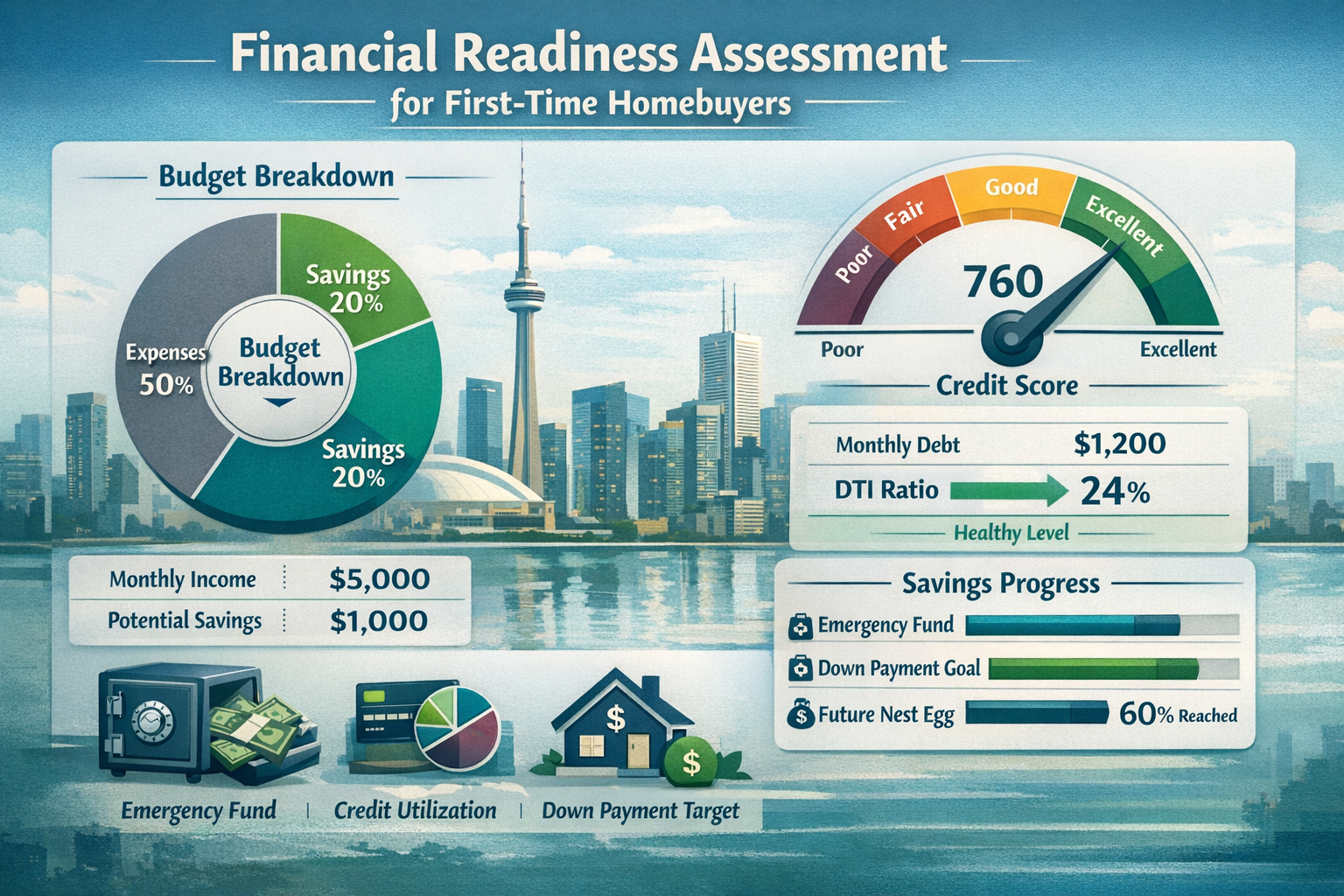
The final step in Buying Your First Home in Toronto’s 2026 Buyer’s Market: Step-by-Step Guide is closing day—when ownership officially transfers to you.
Closing Day Timeline
Morning: Your lawyer receives confirmation that the seller’s lawyer has all required documents.
Midday: Your lender transfers mortgage funds to your lawyer’s trust account.
Early afternoon: Your lawyer transfers the full purchase amount to the seller’s lawyer and registers the property transfer.
Afternoon: Once registration is complete and your lawyer confirms, you can pick up keys from the seller’s lawyer or real estate agent.
Typical possession time: 2:00-6:00 PM, though this varies. Confirm exact timing with your lawyer and agent.
What Happens on Closing Day
Your responsibilities:
- Provide certified cheque or wire transfer for closing costs to your lawyer (sent 1-2 days before)
- Remain available by phone for any last-minute questions
- Arrange to pick up keys once lawyer confirms closing is complete
- Be prepared that timing may shift slightly due to registration delays
Your lawyer’s responsibilities:
- Review all closing documents
- Ensure all conditions are satisfied
- Register mortgage and transfer of ownership
- Pay land transfer taxes
- Distribute funds to seller’s lawyer
- Obtain and provide you with keys
- Provide final reporting letter with all registered documents
Potential Closing Day Issues
Delayed registration: Government land registry offices can experience delays, pushing key pickup later in the day. Build buffer time into your moving schedule.
Funding problems: Ensure your down payment funds are in your lawyer’s trust account at least 2 days before closing to avoid delays.
Title issues: Rarely, unexpected liens or title problems emerge. Your title insurance protects against most scenarios.
Seller doesn’t vacate: If the seller hasn’t moved out by possession time, contact your lawyer immediately. Do not confront the seller directly.
Taking Possession
Upon receiving keys:
🔑 Change the locks: Even if you trust the previous owner, you don’t know who else may have keys.
📸 Document everything: Take photos and videos of the property’s condition for insurance purposes and future reference.
🔍 Locate important items:
- Main water shut-off valve
- Electrical panel
- Gas shut-off
- Furnace and water heater
- Sump pump (if applicable)
📋 Review any manuals: The seller should leave manuals for appliances, systems, and warranties.
🏠 Conduct thorough inspection: Walk through every room, test all systems, and verify everything is as expected from your final walk-through.
First Week in Your New Home
Immediate priorities:
- Install smoke and carbon monoxide detectors (if not present)
- Test all systems (HVAC, plumbing, electrical)
- Meet your neighbors
- Familiarize yourself with garbage/recycling schedules
- Locate nearby amenities (grocery, pharmacy, hospital)
- Set up home maintenance schedule
Financial housekeeping:
- Save all closing documents in a safe place
- Set up automatic mortgage payments
- Create home maintenance fund (budget 1% of home value annually)
- Review and update your budget based on actual costs
- Consider setting up TFSA for future home expenses
Celebrate: You’ve successfully navigated Buying Your First Home in Toronto’s 2026 Buyer’s Market: Step-by-Step Guide! Take time to celebrate this major achievement. 🎉
Common First-Time Buyer Mistakes to Avoid
Learning from others’ mistakes can save you significant time, money, and stress:
Financial Mistakes
❌ Maxing out your budget: Just because you’re approved for a certain amount doesn’t mean you should borrow it all. Leave room for unexpected expenses and lifestyle flexibility.
❌ Forgetting closing costs: First-time buyers often underestimate closing costs (1.5-4% of purchase price), leaving them cash-strapped after closing.
❌ Neglecting emergency fund: Maintain 3-6 months of expenses in savings even after your down payment. Homeownership brings unexpected costs.
❌ Ignoring total cost of ownership: Factor in property taxes, insurance, utilities, maintenance, and condo fees—not just the mortgage payment.
❌ Poor credit management before closing: Avoid opening new credit accounts, making large purchases, or changing jobs between pre-approval and closing.
Property Selection Mistakes
❌ Buying based on emotion alone: While you should love your home, don’t let emotions override financial prudence or ignore serious issues.
❌ Skipping the home inspection: This $400-$600 investment can save you tens of thousands in unexpected repairs.
❌ Overlooking location: You can renovate a house, but you can’t change its location. Prioritize neighborhood over cosmetic features.
❌ Ignoring resale potential: Even if this is your “forever home,” circumstances change. Consider how easy the property will be to sell if needed.
❌ Underestimating renovation costs: If buying a fixer-upper, get contractor quotes before purchasing. Renovations always cost more and take longer than expected.
Process Mistakes
❌ Not getting pre-approved: House hunting without pre-approval wastes time and may cause you to miss opportunities when you finally get financing arranged.
❌ Working without professional representation: Trying to save commission by not using a buyer’s agent often costs more in the long run through poor negotiations and missed issues.
❌ Waiving conditions inappropriately: In 2026’s buyer’s market, there’s no reason to waive inspection or financing conditions.
❌ Poor communication with your team: Keep your agent, broker, and lawyer informed and respond promptly to requests.
❌ Making major life changes during the process: Avoid changing jobs, making large purchases, or taking on new debt between pre-approval and closing.
Maintaining Your Home and Building Equity
Homeownership doesn’t end at closing—it’s just beginning. Proper maintenance and strategic financial management will protect your investment and build long-term wealth.
Essential Home Maintenance
Monthly tasks:
- Test smoke and carbon monoxide detectors
- Clean or replace HVAC filters
- Check for leaks under sinks
- Clean range hood filters
- Inspect and clean dryer vent
Seasonal tasks:
Spring:
- Inspect roof for winter damage
- Clean gutters and downspouts
- Check grading and drainage
- Service air conditioning
- Inspect and repair caulking
- Power wash exterior
Summer:
- Inspect and maintain deck/patio
- Check and repair window screens
- Inspect foundation for cracks
- Trim trees and shrubs away from house
Fall:
- Clean gutters again after leaves fall
- Service furnace
- Winterize outdoor faucets
- Check weatherstripping on doors and windows
- Inspect chimney and fireplace
Winter:
- Monitor for ice dams on roof
- Keep walkways clear and salted
- Prevent frozen pipes in cold snaps
- Monitor humidity levels (30-50% ideal)
Annual tasks:
- Professional HVAC service
- Water heater maintenance
- Chimney cleaning (if applicable)
- Septic system inspection (if applicable)
- Pest inspection
- Roof inspection
Building Equity Strategies
Accelerated payments: Switching from monthly to accelerated bi-weekly payments can shave years off your mortgage and save thousands in interest.
Lump sum payments: Use bonuses, tax refunds, or windfalls to make annual lump sum payments within your prepayment privileges.
Payment increases: Increase your payment amount by 10-20% annually (if permitted) as your income grows.
Refinancing strategically: When rates drop significantly or your home value increases substantially, consider refinancing to access better terms or tap into home equity for strategic purposes.
Strategic renovations: Focus on improvements that add value:
- Kitchen and bathroom updates (highest ROI)
- Finished basements
- Additional bedrooms/bathrooms
- Energy efficiency improvements
- Curb appeal enhancements
Long-Term Financial Planning
Track your home’s value: Monitor comparable sales in your neighborhood to understand your equity position.
Review mortgage at renewal: Don’t automatically accept your lender’s renewal offer. Shop rates 120 days before renewal.
Consider additional real estate: As equity builds and income grows, some homeowners explore investment properties or ADUs for additional income.
Maintain adequate insurance: Review your home insurance annually and adjust coverage as your home’s value changes.
Plan for major expenses: Create a capital reserve for major replacements:
- Roof: $8,000-$15,000+ (every 20-25 years)
- HVAC: $5,000-$10,000 (every 15-20 years)
- Windows: $10,000-$30,000+ (every 20-30 years)
- Driveway: $3,000-$8,000 (every 20-30 years)
Conclusion: Your Path to Homeownership in Toronto’s 2026 Buyer’s Market
Toronto’s 2026 real estate market presents a rare opportunity for first-time buyers. With benchmark prices at five-year lows of $936,100, 5.8 months of inventory supply, and a sales-to-new-listings ratio of just 28.6%, the conditions strongly favor purchasers willing to act strategically.[3]
This comprehensive guide to Buying Your First Home in Toronto’s 2026 Buyer’s Market: Step-by-Step Guide has outlined the complete journey from financial preparation through closing day and beyond. The key to success lies in thorough preparation, assembling the right professional team, and leveraging current market conditions to negotiate favorable terms.
Your Action Plan
Immediate next steps (Weeks 1-4):
- Assess your finances: Calculate your true budget, including all costs of ownership
- Optimize your credit: Review your credit report and begin improving your score
- Maximize savings programs: Open an FHSA and maximize RRSP contributions for the Home Buyers’ Plan
- Get pre-approved: Secure mortgage pre-approval to understand your borrowing capacity and lock in rates
- Assemble your team: Find a buyer’s agent, mortgage broker, and real estate lawyer
Short-term steps (Months 2-3):
- Define your criteria: Determine must-haves, nice-to-haves, and target neighborhoods
- Begin house hunting: Set up property alerts and attend open houses
- Research neighborhoods: Visit areas at different times to assess fit
- Refine your budget: Based on actual market prices and your preferences
Medium-term steps (Months 3-6):
- Make strategic offers: When you find the right property, negotiate confidently
- Conduct due diligence: Complete thorough inspections and review all documentation
- Finalize financing: Convert pre-approval to final mortgage commitment
- Prepare for closing: Work with your lawyer and arrange utilities, insurance, and moving
Long-term success (Years 1+):
- Maintain your home: Follow a regular maintenance schedule to protect your investment
- Build equity: Make accelerated payments and strategic lump sums when possible
- Plan strategically: Review your mortgage at renewal and consider refinancing opportunities
- Grow your wealth: Use homeownership as a foundation for long-term financial security
The Market Outlook
Remember that TRREB projects prices to remain stable in the $1 million to $1.03 million range throughout 2026, with modest recovery not expected until 2027 and full recovery to 2022 peaks not anticipated until 2029-2030.[1][5] This timeline means:
- No urgency to rush: Take time to find the right property
- Negotiating power persists: Buyer-favorable conditions likely to continue through 2026
- Long-term perspective essential: Buy for your lifestyle and long-term goals, not short-term speculation
Final Thoughts
Homeownership represents more than just a financial investment—it’s a foundation for stability, community connection, and long-term wealth building. While the process may seem overwhelming, thousands of first-time buyers successfully navigate it every year.
Toronto’s 2026 buyer’s market provides advantages that haven’t existed in years. By following this step-by-step guide, preparing thoroughly, and working with experienced professionals, you can join the ranks of successful homeowners and build equity in one of Canada’s most dynamic cities.
The opportunity is here. The market conditions are favorable. The only question is: are you ready to take the first step?
Start your journey today by assessing your finances, checking your credit score, and connecting with a mortgage broker to explore your pre-approval options. Your future home in Toronto awaits. 🏠🔑
References
[1] Real Estate Forecast For The Next 5 Years In Ontario 2026 2030 – https://www.noradarealestate.com/blog/real-estate-forecast-for-the-next-5-years-in-ontario-2026-2030/
[2] Watch – https://www.youtube.com/watch?v=CwtgWW_ClYM
[3] Toronto Housing Market – https://wowa.ca/toronto-housing-market
[4] Gta Sales Prices Trreb 2026 – https://storeys.com/gta-sales-prices-trreb-2026/
[5] Gta Home Sales And Prices Expected To Remain Stable In 2026 Amid Ongoing Affordability Pressures – https://trreb.ca/gta-home-sales-and-prices-expected-to-remain-stable-in-2026-amid-ongoing-affordability-pressures/
[6] Housing Market Outlook 2026 – https://globalnews.ca/news/11661284/housing-market-outlook-2026/
[7] Housing Market Outlook – https://www.cmhc-schl.gc.ca/professionals/housing-markets-data-and-research/market-reports/housing-market/housing-market-outlook
[8] Foch Trrebs 2026 Outlook Underestimates Growing Market Risks – https://realestatemagazine.ca/foch-trrebs-2026-outlook-underestimates-growing-market-risks/
 Previous Page