February 24, 2026
SaaS Pricing Price Surge 2025: How 72% of Growth Comes from Increases and What Buyers Can Do
Share this article:



Manzeel is an award-winning Mortgage Broker and the Owner of the Toronto-based mortgage, Everything Mortgages.
With 16 years of experience in the Canadian mortgage industry and a formal background in mortgage underwriting, Manzeel’s lending expertise gives him unique insight into whether a deal is feasible which empowers his clients to make more informed lending decisions faster.
He has been recognized as one of Canada’s Top 10 Mortgage Brokers by the national Canadian Mortgage Professionals (CMP) Association. Him and his team of 18 mortgage agents are proud to offer a mortgage experience that's built on honesty, trust, and integrity. He prides himself on the brokerage’s dedication to deliver an excellent client experience throughout the entire home loan process from pre-approval to post-funding.
Since moving to Toronto in 1998, Manzeel has successfully launched and scaled several businesses from the ground up, ranging from a mortgage brokerage and a vast real estate investment portfolio to a private financing eCommerce platform. He continues to be a leader in the real estate industry as he uses his analytical expertise to seek new real estate investment opportunities.
As a tech junkie and avid sports enthusiast, when Manzeel’s not working with clients, you can find him reading technology blogs, playing squash or watching tennis with his two boys.
`
The software industry has entered a new era where price hikes, not customer acquisition, drive revenue growth. As businesses across North America grapple with economic uncertainty in 2026, a troubling trend has emerged: SaaS vendors are increasingly relying on price increases rather than innovation to fuel their bottom lines. The SaaS Pricing Price Surge 2025: How 72% of Growth Comes from Increases and What Buyers Can Do has become a critical concern for organizations trying to control their technology budgets.
Recent industry data reveals that up to 72% of annual recurring revenue (ARR) growth for many SaaS companies now comes from price increases rather than new customer acquisition.[1] This shift represents a fundamental change in how software vendors operate, with platforms like Slack, HubSpot, and Salesforce introducing new pricing mechanisms—from AI credits to expanded seat-based models—that obscure the true cost of doing business.
For buyers, this means traditional budgeting approaches no longer work. Organizations must develop new strategies to negotiate effectively and identify cost-saving alternatives before renewal season arrives.
Key Takeaways
✅ SaaS costs per employee reached $9,100 by end of 2025, representing a 15% increase over two years—far exceeding general market inflation rates.[1]
✅ SaaS inflation is now nearly 5x higher than standard G7 market inflation, with the gap continuing to widen as consumer prices stabilize.[1]
✅ 60% of vendors deliberately mask their rising prices through complex pricing models, AI bundling, and credit multipliers that make cost clarity difficult.[1]
✅ Hybrid pricing models combining subscriptions with usage-based charges are becoming dominant, with 59% of providers expecting this approach to grow their revenue share.[3]
✅ Strategic negotiation tactics and alternative solutions can help buyers reduce SaaS spending by 15-30% despite aggressive vendor pricing strategies.
Understanding the SaaS Pricing Price Surge 2025: The Numbers Behind the Crisis
The scale of the SaaS pricing crisis becomes clear when examining the data. Organizations are experiencing cost pressures unlike anything seen in previous years, and the trend shows no signs of slowing.
The Staggering Cost Increase Per Employee
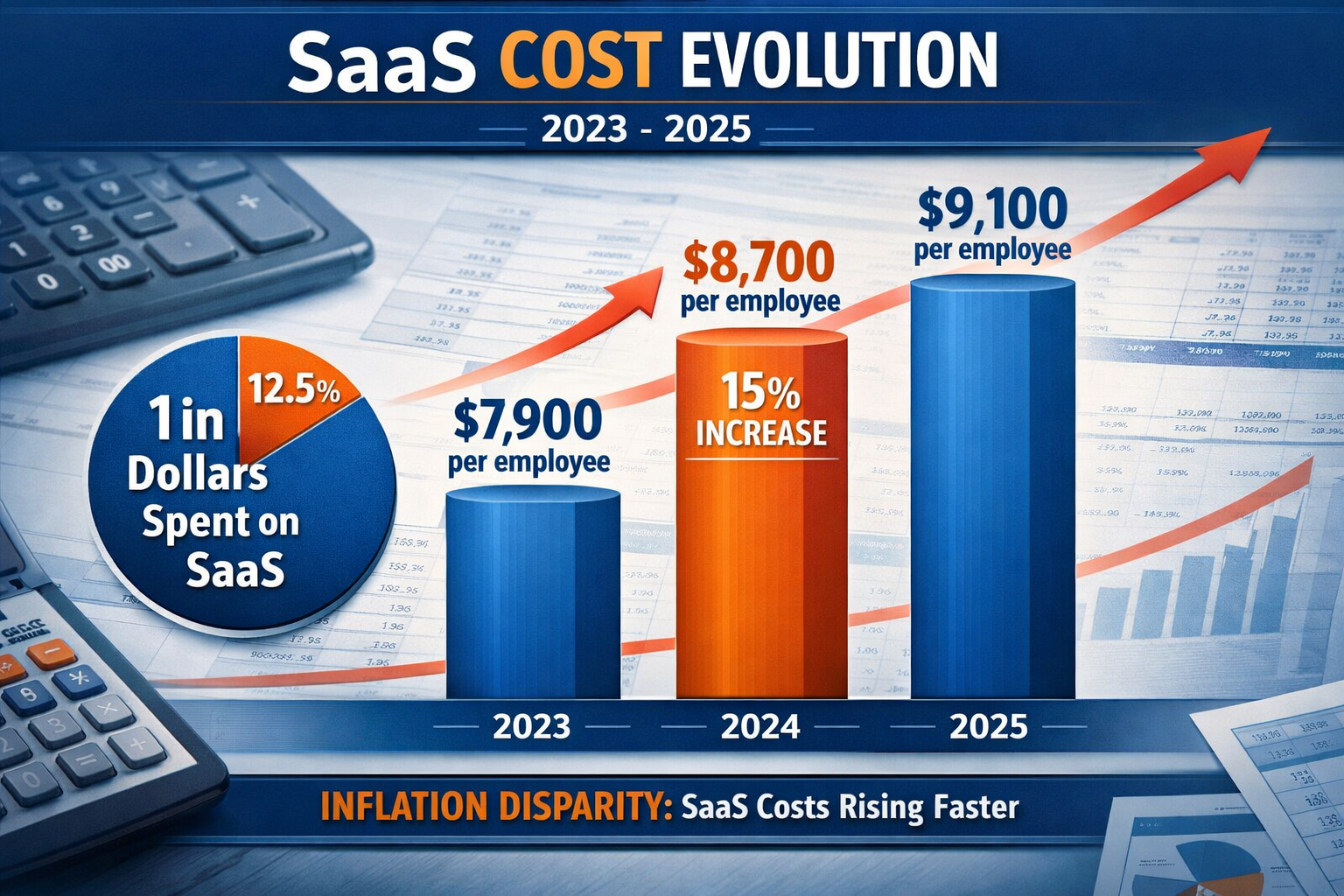
By the end of 2025, the average SaaS spend per employee reached approximately $9,100, up from $8,700 in 2024 and $7,900 in 2023.[1] This 15% increase over just two years represents a dramatic acceleration in software costs that far outpaces:
- General market inflation (averaging 2-3% in G7 countries)
- Salary increases (typically 3-5% annually)
- Overall IT budget growth (averaging 4-6%)
The gap between SaaS inflation and general market inflation has become so pronounced that SaaS inflation is now nearly 5x higher than standard consumer price increases.[1] While everyday goods and services have seen inflation rates drop to manageable levels, software vendors continue pushing aggressive price increases.
Budget Allocation Shifts: The $1 in $8 Reality
Perhaps most concerning is how SaaS spending now dominates organizational budgets. $1 in every $8 is now being spent on SaaS for a typical organization.[1] This dramatic shift in budget allocation has occurred primarily due to rising SaaS prices rather than headcount increases or expanded software adoption.
| Year | SaaS Cost Per Employee | Year-over-Year Increase | Budget Share |
|---|---|---|---|
| 2023 | $7,900 | Baseline | ~11% |
| 2024 | $8,700 | 10.1% | ~11.5% |
| 2025 | $9,100 | 4.6% | ~12.5% |
This trend creates significant challenges for organizations trying to balance technology investments with other critical expenses. Much like how homeowners must carefully manage their budgets when facing rising mortgage costs and financial pressures, businesses must develop strategies to control SaaS spending without sacrificing operational efficiency.
Renewal Price Increases: The New Normal
The average annual SaaS application price increase now stands at approximately 8.7%, with individual renewals ranging from 10-25%.[3] These increases have become normalized across the industry, with vendors citing various justifications:
- 🤖 AI feature additions (even if customers don’t use them)
- 💰 Infrastructure cost increases (cloud computing, data storage)
- 📈 Enhanced capabilities (often marginal improvements)
- 🔒 Security and compliance investments (industry standard requirements)
The reality is that many of these justifications mask simple profit-taking. Vendors know that switching costs are high, and they exploit customer lock-in to extract maximum value during renewal negotiations.
How Vendors Hide Price Increases: The SaaS Pricing Price Surge 2025 Tactics Exposed
Understanding how vendors obscure their price increases is essential for buyers hoping to negotiate effectively. The SaaS Pricing Price Surge 2025: How 72% of Growth Comes from Increases and What Buyers Can Do requires recognizing these common tactics.
Price Masking Strategies
Research shows that 60% of vendors deliberately mask their rising prices, making cost clarity in negotiations extremely difficult.[1] This price masking takes several forms:
1. AI Feature Bundling
Vendors are increasingly using AI feature bundling to justify price hikes without appearing to raise baseline prices.[3] For example:
- Slack introduced AI-powered search and summarization features, then increased prices by 10-15% for “AI-enhanced” tiers
- HubSpot added AI content assistants and raised prices across all tiers, even for customers who don’t use AI features
- Salesforce bundled Einstein AI into standard packages with corresponding price increases
The problem? Many organizations don’t need or use these AI features, yet they’re forced to pay for them.
2. Credit Multiplier Systems
Vendors deploy credit multipliers that reduce the value of purchased units.[3] Here’s how this works:
- A customer purchases 10,000 API credits
- The vendor introduces a “credit multiplier” where certain operations now cost 2x or 3x the original credit value
- The customer’s 10,000 credits effectively become 5,000 or 3,333 credits
- The vendor hasn’t technically “raised prices,” but the customer gets less value
3. Hybrid Pricing Model Complexity
Hybrid pricing models combining base subscriptions with variable usage tiers are expected to dominate enterprise AI by 2026.[2] While these models can align costs with value, they also create opacity:
- Base subscription fees increase annually
- Usage tiers have separate escalation schedules
- Customers struggle to predict total costs
- Vendors can increase either component without obvious price hikes
The Shift to Usage-Based Pricing
Three out of five SaaS companies now use usage-based pricing (UBP), with 46% blending subscriptions with variable charges.[3] This represents a dramatic shift from traditional seat-based models.
“59% of SaaS providers expect usage-based pricing to grow their revenue share, a dramatic increase from only 18% holding this expectation in 2023.”[3]
While usage-based pricing can theoretically align costs with value, it often results in:
- 📊 Unpredictable monthly costs that complicate budgeting
- 🚀 Explosive growth charges during peak usage periods
- 🔍 Limited visibility into what drives usage costs
- 💸 Higher total costs compared to traditional models
Outcome-Based Pricing Components
Gartner projected over 30% of enterprise SaaS solutions would incorporate outcome-based components by 2025, up from approximately 15% in 2022.[4] This rapid adoption indicates vendors are experimenting with new ways to extract value from customers.
Outcome-based pricing sounds appealing—pay based on results achieved—but it often includes:
- Complex calculation methodologies that favor vendors
- Baseline metrics that ensure minimum payments regardless of outcomes
- Attribution challenges that make it difficult to verify vendor claims
- Lock-in mechanisms that prevent switching once outcomes are measured
What Buyers Can Do: Strategies to Combat the SaaS Pricing Price Surge 2025
Despite aggressive vendor tactics, buyers have more leverage than they realize. The key is approaching negotiations strategically and being willing to explore alternatives. Similar to how borrowers must carefully evaluate their mortgage options and negotiate terms, SaaS buyers need to develop sophisticated procurement strategies.
Negotiation Tactics That Work
1. Conduct Comprehensive Usage Audits
Before entering renewal negotiations, understand exactly how your organization uses the software:
- Identify unused licenses and features
- Document actual usage patterns vs. contracted capacity
- Calculate the true cost per active user
- Identify redundant tools that overlap in functionality
This data becomes powerful leverage in negotiations. When vendors propose price increases, you can counter with usage data showing you’re already overpaying for underutilized capacity.
2. Leverage Multi-Year Agreements Strategically
While vendors are dialing back multi-year discount incentives to maintain pricing flexibility,[3] they still value revenue certainty. Use this to your advantage:
- Request 3-year price locks in exchange for multi-year commitments
- Negotiate escalation caps (e.g., maximum 3% annual increases)
- Include performance guarantees and service level agreements (SLAs)
- Build in early termination clauses if the vendor fails to deliver
3. Create Competitive Pressure
Nothing motivates vendors like the threat of losing business:
- Actively evaluate alternative solutions before renewal discussions
- Obtain pricing from competitors and share during negotiations
- Build relationships with multiple vendors in each category
- Be genuinely willing to switch if terms aren’t favorable
4. Negotiate Contract Terms Beyond Price
Focus on total cost of ownership, not just subscription fees:
- Request waived implementation fees for renewals
- Negotiate free training and support services
- Secure credits for service outages or performance issues
- Include clauses that prevent mid-contract price increases
5. Bundle Negotiations Across Products
If you use multiple products from the same vendor:
- Consolidate renewal timing to negotiate as a package
- Request enterprise-wide discounts based on total spend
- Use performance issues in one product as leverage for others
- Threaten to reduce footprint across all products if terms aren’t favorable
Alternative Solutions and Cost Optimization
Beyond negotiation, consider these strategies to reduce SaaS spending:
Explore Open-Source Alternatives
Many commercial SaaS products have open-source alternatives that provide 80% of the functionality at 20% of the cost:
- Communication: Mattermost or Rocket.Chat instead of Slack
- CRM: SuiteCRM or EspoCRM instead of Salesforce
- Project Management: OpenProject or Taiga instead of Asana
Implement SaaS Management Platforms
Dedicated SaaS management tools help organizations:
- Track all software subscriptions and spending
- Identify redundant or unused licenses
- Automate license optimization and deprovisioning
- Negotiate better terms through data-driven insights
Consider Regional or Industry-Specific Vendors
Smaller, specialized vendors often provide:
- More flexible pricing models
- Better customer service and support
- Willingness to customize solutions
- Lower total costs with comparable functionality
Build vs. Buy Analysis
For critical applications, evaluate whether building custom solutions makes financial sense:
- Calculate 5-year total cost of ownership for SaaS vs. custom development
- Consider internal expertise and development capacity
- Assess strategic value of owning vs. renting the solution
- Factor in switching costs and vendor lock-in risks
Timing Your Negotiations
When you negotiate matters as much as how you negotiate:
- 📅 Start 6-9 months before renewal to allow time for alternative evaluation
- 💼 Negotiate during vendor quarter-end when sales teams have quotas to hit
- 📉 Monitor vendor financial performance and negotiate when they’re struggling
- 🔄 Align renewals across your portfolio to maximize negotiating leverage
The Future of SaaS Pricing: What to Expect Beyond 2025

As we move through 2026, several trends will shape the SaaS pricing landscape:
Continued Pricing Pressure
SaaS inflation is unlikely to moderate significantly in the near term. Vendors have discovered that existing customers will absorb substantial price increases rather than undertake costly migrations. Expect:
- Annual price increases of 8-12% to remain standard
- More sophisticated pricing models that obscure true costs
- Increased use of AI as justification for premium pricing
- Greater differentiation between “standard” and “enterprise” tiers
Regulatory Scrutiny
As SaaS spending becomes a larger portion of organizational budgets, expect increased regulatory attention:
- Transparency requirements for pricing changes
- Restrictions on mid-contract price increases
- Consumer protection regulations extending to B2B SaaS
- Antitrust scrutiny of dominant platform vendors
Market Consolidation
The pricing pressure is driving market consolidation:
- Smaller vendors struggling to compete on price will be acquired
- Platform vendors expanding through acquisition to justify price increases
- Customers facing fewer alternatives and less negotiating leverage
- Increased importance of multi-vendor strategies to maintain optionality
Rise of Consumption-Based Everything
The shift toward consumption-based pricing will accelerate:
- Traditional seat-based models will become increasingly rare
- Hybrid models combining subscriptions and usage will dominate
- Greater emphasis on value metrics and outcome-based pricing
- Increased complexity in budgeting and cost management
Much like how the mortgage market has evolved with new products and pricing structures, the SaaS market continues to innovate in ways that benefit vendors more than buyers.
Building a Sustainable SaaS Strategy for 2026 and Beyond
Organizations need a comprehensive approach to managing SaaS costs that goes beyond tactical negotiations:
Establish SaaS Governance
Create formal processes for:
- Approval workflows for new SaaS purchases
- Regular reviews of existing subscriptions and usage
- Centralized procurement to prevent shadow IT
- Cost allocation to business units to drive accountability
Develop Vendor Relationships
While maintaining negotiating leverage, build strategic relationships with key vendors:
- Participate in customer advisory boards
- Provide product feedback and feature requests
- Attend vendor events and training sessions
- Build relationships with account teams and executives
Invest in Financial Literacy
Ensure your team understands:
- How different pricing models work and their implications
- Total cost of ownership calculations
- Contract terms and their financial impact
- Negotiation strategies and tactics
Create a Technology Roadmap
Align SaaS investments with business strategy:
- Identify core vs. non-core applications
- Plan for technology refresh cycles
- Evaluate build vs. buy decisions strategically
- Consider platform consolidation opportunities
Monitor Industry Trends
Stay informed about:
- Pricing trends in your key software categories
- New entrants and alternative solutions
- Vendor financial health and acquisition activity
- Regulatory changes affecting SaaS contracts
Similar to how homeowners must stay informed about mortgage market trends and opportunities, SaaS buyers need ongoing market intelligence to make informed decisions.
Real-World Examples: How Organizations Are Fighting Back
Several organizations have successfully reduced SaaS costs despite the pricing surge:
Case Study 1: Mid-Size Tech Company
Challenge: Facing a 25% renewal increase from their primary CRM vendor
Strategy:
- Conducted comprehensive usage audit showing 40% unused licenses
- Evaluated three alternative CRM solutions
- Presented competitive pricing to incumbent vendor
- Negotiated 3-year price lock with 5% discount
Result: Reduced annual CRM costs by 18% compared to proposed renewal
Case Study 2: Enterprise Financial Services Firm
Challenge: SaaS portfolio costs growing 15% annually, consuming increasing budget share
Strategy:
- Implemented SaaS management platform
- Consolidated vendors from 47 to 23
- Negotiated enterprise agreements with strategic vendors
- Moved non-critical applications to open-source alternatives
Result: Reduced total SaaS spending by 22% while maintaining functionality
Case Study 3: Healthcare Organization
Challenge: Communication platform (Slack) proposed 20% increase with AI features they didn’t need
Strategy:
- Evaluated Microsoft Teams as alternative (already licensed)
- Conducted pilot migration with 100 users
- Presented migration plan to Slack account team
- Negotiated to maintain current pricing for 2 years
Result: Avoided $180,000 in additional annual costs
These examples demonstrate that buyers have options when vendors propose excessive price increases. The key is preparation, willingness to consider alternatives, and strategic negotiation.
The Connection Between SaaS Costs and Overall Financial Health
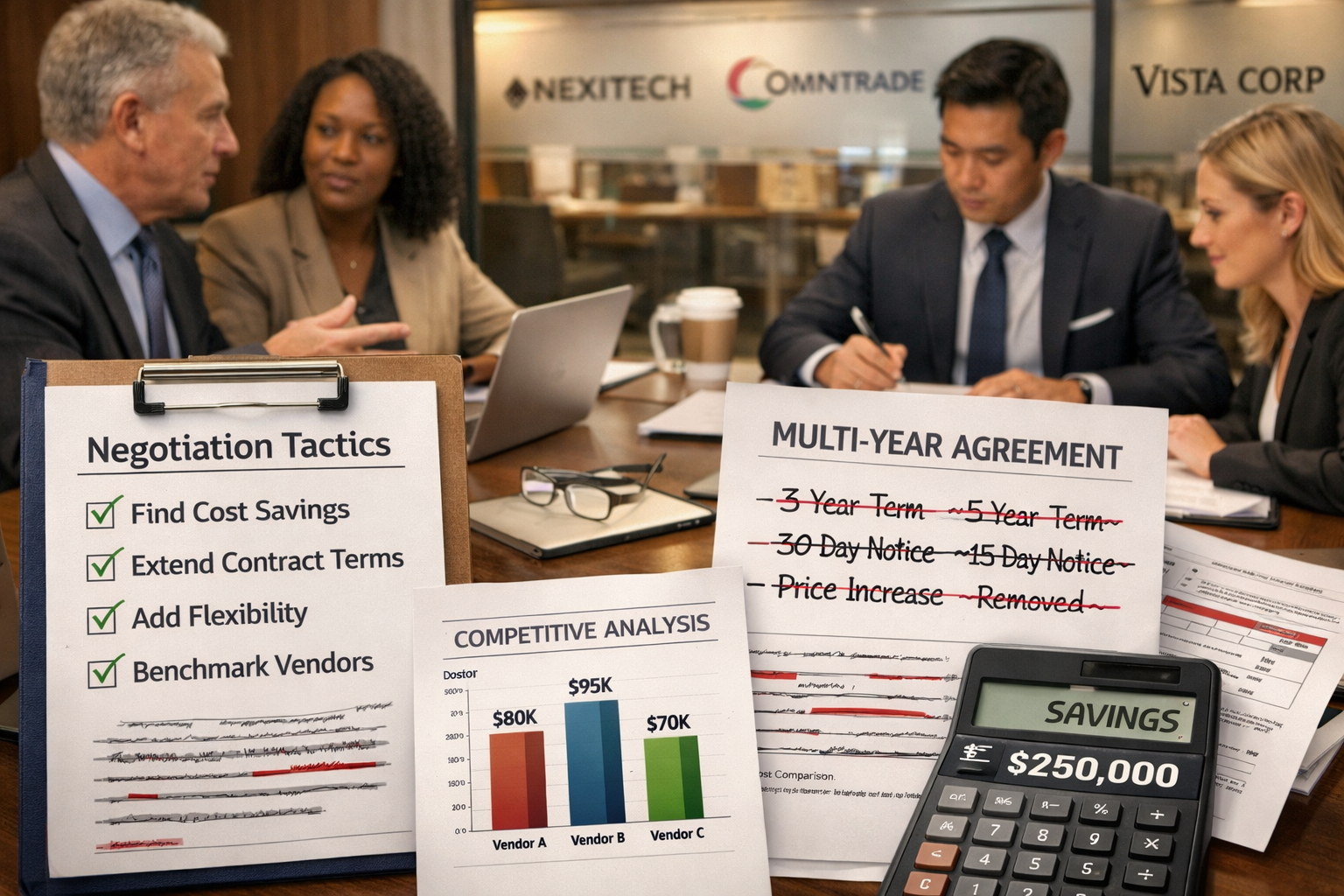
Managing SaaS spending effectively connects to broader financial management principles. Organizations that excel at controlling software costs typically also:
- Maintain disciplined budgeting processes across all spending categories
- Invest in financial planning and analysis capabilities
- Align technology investments with strategic business objectives
- Monitor and optimize all major cost categories regularly
This holistic approach to financial management mirrors how individuals must manage their overall financial health, balancing competing priorities while working toward long-term goals.
For organizations experiencing rapid growth or transformation, controlling SaaS costs becomes even more critical. Just as mortgage refinancing can help homeowners optimize their financial position, strategic SaaS portfolio management can free up capital for more valuable investments.
Conclusion: Taking Control of Your SaaS Destiny
The SaaS Pricing Price Surge 2025: How 72% of Growth Comes from Increases and What Buyers Can Do represents a fundamental shift in the software industry. With vendors increasingly relying on price increases rather than innovation to drive revenue growth, buyers must adapt their strategies to protect their budgets and maintain negotiating leverage.
The data is clear: SaaS costs per employee reached $9,100 by end of 2025, with SaaS inflation running nearly 5x higher than general market inflation.[1] 60% of vendors deliberately mask their rising prices through complex pricing models, AI bundling, and credit multipliers.[1] The average renewal increase of 8.7% has become normalized, with individual increases ranging from 10-25%.[3]
But buyers aren’t powerless. By implementing the strategies outlined in this guide, organizations can:
✅ Reduce SaaS spending by 15-30% through strategic negotiations ✅ Gain visibility and control over their software portfolios ✅ Build sustainable processes for managing SaaS costs long-term ✅ Maintain leverage with vendors through competitive evaluation ✅ Align technology investments with business value
Action Steps for 2026
Immediate Actions (Next 30 Days):
- Audit your current SaaS portfolio – Document all subscriptions, costs, and usage
- Identify upcoming renewals – Create a calendar of renewal dates for the next 12 months
- Establish baseline metrics – Calculate current cost per employee and budget share
- Form a SaaS governance team – Assign responsibility for portfolio management
Short-Term Actions (Next 90 Days):
- Evaluate alternatives for your top 5 most expensive applications
- Implement a SaaS management platform to track spending and usage
- Develop negotiation playbooks for your key vendor categories
- Create approval workflows for new SaaS purchases
Long-Term Actions (Next 12 Months):
- Build strategic vendor relationships while maintaining competitive pressure
- Consolidate your vendor portfolio to reduce complexity and costs
- Invest in financial literacy for procurement and IT teams
- Develop a multi-year technology roadmap aligned with business strategy
The SaaS pricing surge shows no signs of abating in 2026. Vendors have discovered that existing customers will absorb substantial price increases rather than undertake costly migrations. Only through strategic procurement, active portfolio management, and willingness to consider alternatives can organizations protect their budgets and maintain control over their technology destiny.
The question isn’t whether SaaS prices will continue rising—they will. The question is whether your organization will be prepared to respond strategically, negotiate effectively, and make informed decisions that protect your financial interests while maintaining the technology capabilities your business needs.
Take action now, before your next renewal deadline arrives.
References
[1] Saas Inflation Index Report – https://www.vertice.one/l/saas-inflation-index-report
[2] Ai Pricing In 2026 – https://www.valueships.com/post/ai-pricing-in-2026
[3] Saas Industry – https://www.bettercloud.com/monitor/saas-industry/
[4] The 2026 Guide To Saas Ai And Agentic Pricing Models – https://www.getmonetizely.com/blogs/the-2026-guide-to-saas-ai-and-agentic-pricing-models
 Previous Page